

Key Takeaways
Capsule Wardrobe
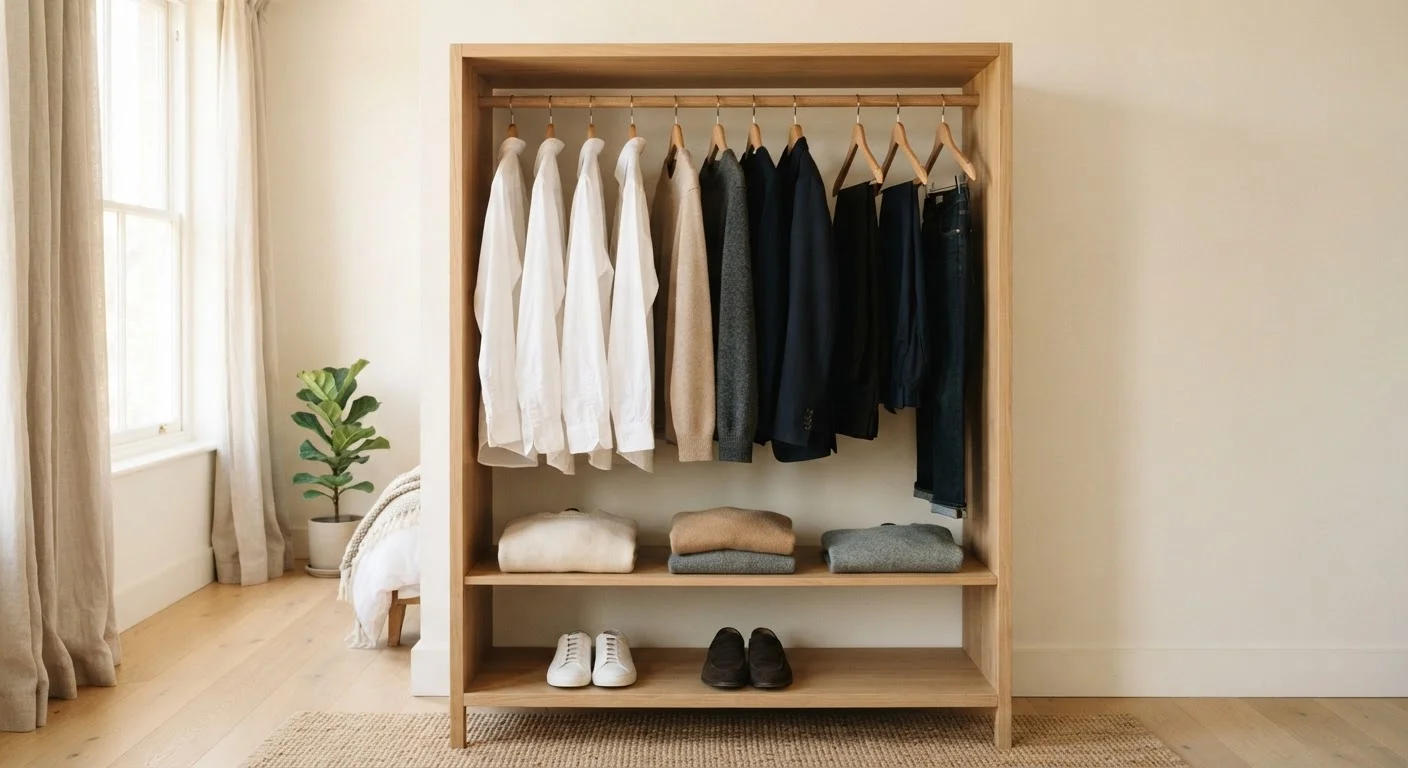
A capsule wardrobe is a small, intentionally chosen collection of clothing pieces that work well together, covering most of your everyday dressing needs with minimal overlap or waste. The idea is that every item earns its place — nothing hangs unused. Rather than chasing trends, a capsule focuses on versatile, timeless pieces that mix and match easily. It's a philosophy of intentional ownership, not a strict rule about how many items you should own.
The term is often loosely associated with a fixed item count (commonly cited as 30–40 pieces), but no universally agreed standard exists — the concept is adaptable by lifestyle, climate, and personal style.
Where the Concept Came From
The phrase "capsule wardrobe" is credited to Susie Faux, a London boutique owner who used it in the 1970s to describe a core set of quality, enduring pieces a woman could build her entire wardrobe around. The idea gained wider traction in the 1980s when American fashion designer Donna Karan released a collection explicitly built on the concept — a small group of interchangeable workwear pieces designed to carry a woman from desk to dinner.
Since then, the concept has evolved far beyond its original professional-women focus. Today it's applied across genders, budgets, and aesthetics. The core idea, however, remains unchanged: own less, but choose better, and make sure everything you own actually gets worn.
“A capsule wardrobe is not about owning less for its own sake — it's about owning things that genuinely work for your life. The goal is a wardrobe where every piece pulls its weight.”
— Susie Faux, London boutique owner and originator of the capsule wardrobe concept
What a Capsule Wardrobe Actually Contains
A typical capsule centers on what stylists call "wardrobe workhorses" — pieces that are versatile enough to appear in multiple outfits across different contexts. These usually include basics like well-fitting trousers, simple tops in neutral or complementary colors, a structured jacket or blazer, a few layers for warmth, and comfortable but polished shoes. The exact mix varies widely depending on where you live, what you do, and how you like to dress.
What defines a capsule isn't a specific list of items — it's the logic behind the selection. Every piece should be able to pair with at least two or three others in the collection. If something only works as a standalone statement, it may not belong in a lean capsule. For guidance on which types of pieces tend to earn their keep across seasons, our seasonal wardrobe essentials guide breaks it down in practical terms.
~20%
Clothing worn regularly from average closet
Research and wardrobe consultants frequently cite the pattern that most people wear a small fraction of what they own on a regular basis, though exact figures vary by study.
33
Items in Project 333's capsule challenge
Project 333, a popular minimalist fashion challenge, suggests dressing with 33 items or fewer for three months — a widely referenced benchmark in capsule wardrobe discussions.
3x
Outfits possible from one versatile piece
Style educators often use the "cost per wear" and multi-outfit potential framework to evaluate whether a single item justifies its place in a lean wardrobe.
Does the Capsule Approach Actually Work?
The honest answer: it depends on how honestly you apply it. The capsule concept works well for people who experience decision fatigue around getting dressed, who regularly overbuy and underlive, or who want to align their spending with their actual lifestyle rather than an aspirational one. When built thoughtfully, a capsule can simplify mornings, reduce impulse purchases, and make your wardrobe feel more cohesive.
Where it tends to break down is when people treat the capsule as a rigid ruleset rather than a personal framework. A capsule built around someone else's aesthetic — or around Pinterest-perfect neutrals that don't suit your personality — rarely gets used the way it's supposed to. The framework has to reflect your real life: your job, your climate, your social calendar, and genuinely how you want to feel when you get dressed.
If you're starting from nothing or rebuilding after a major closet overhaul, our guide to building a versatile wardrobe from scratch offers a practical, step-by-step approach. And if you're figuring out how to make it feel authentically yours, curating a wardrobe that reflects you walks through the self-reflection side of the process.
Start With What You Already Own
Before buying anything new, spend a week or two paying close attention to what you actually reach for in your current closet. The pieces you return to repeatedly are the foundation of your personal capsule. Gaps and duplicates become much clearer once you've observed your real habits rather than your aspirational ones.
Common Misconceptions Worth Clearing Up
One persistent myth is that a capsule wardrobe has to be monochrome, minimal, or expensive. None of those things are true. You can build a capsule around bold colors, prints, or a maximalist-leaning aesthetic — as long as the pieces still work together and get worn. Likewise, capsule pieces don't have to come from luxury labels. Durability and versatility matter more than price tags.
Another misconception is that you need to purge everything at once. Most style professionals suggest the opposite: audit gradually, wear what you already own more deliberately, and identify genuine gaps before filling them. The goal is a wardrobe that functions well for your life — not an aesthetic project completed over one weekend.
The capsule concept is ultimately a lens for making more conscious choices about what you bring into your closet and why. Whether you adopt it fully or just borrow its logic for a more intentional edit, the underlying question it asks is worth sitting with: Does what I own actually serve who I am and how I live?