

Key Takeaways
Personal Style
Personal style is the consistent, evolving way a person expresses their identity, values, and personality through clothing, accessories, and beauty choices. Unlike fashion trends — which are driven by the industry and change seasonally — personal style is rooted in self-knowledge. It's the visual language you develop over time that feels unmistakably like you, regardless of what's currently on the runway.
In psychology and identity research, clothing behavior is recognized as a form of nonverbal self-presentation — a way individuals signal membership, individuality, and mood to both themselves and others.
Style Is a Language, Not a Uniform
When most people hear the word "style," they picture a polished influencer or a runway look — something aspirational, perhaps unattainable. But personal style has nothing to do with perfection or prestige. It's closer to a language: a set of visual choices that communicate something true about who you are without you having to say a word.
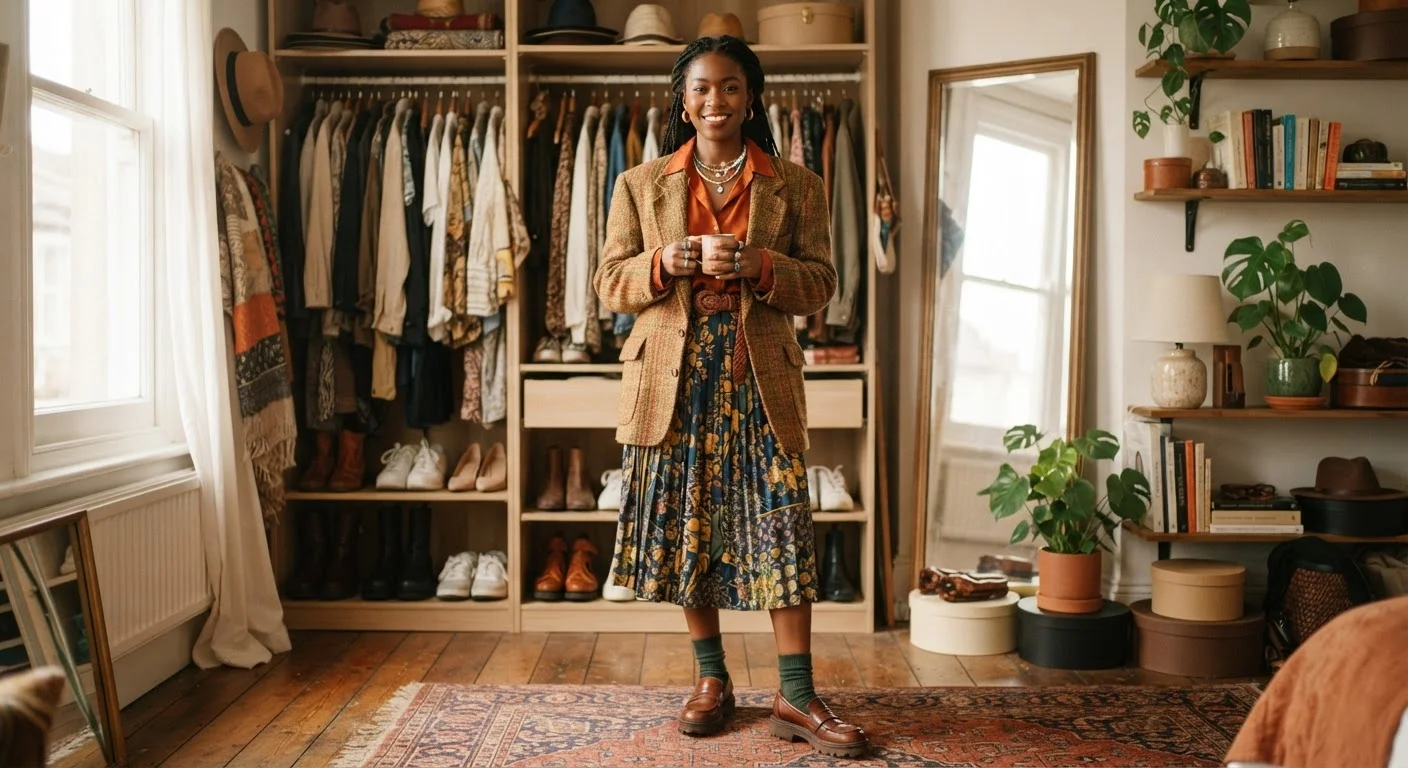
Think of the person who always wears earthy tones and natural fabrics because they feel most at ease that way. Or the one who layers bold prints confidently in a sea of neutrals. Neither is following a strict formula; both are speaking fluently in their own visual dialect. That's personal style — and it belongs to everyone, not just those with fashion credentials.
The confusion often comes from conflating style with fashion. Fashion is an industry and a cultural moment. Style is personal and persistent. The two can absolutely intersect — you might love a particular trend and find it fits your existing aesthetic beautifully — but they don't have to. You can dress with real intention and coherence without ever consulting a trend report. For a broader look at how these two forces interact, exploring the balance between personal style and trends is a useful next step.
“Fashion can be bought. Style one must possess.”
— Edna Woolman Chase, Former Editor-in-Chief, Vogue magazine
Why Trends Alone Won't Get You There
Trends exist for real reasons — they reflect cultural moods, collective aesthetics, and shared moments in time. There's nothing inherently wrong with following them. The issue arises when trend-chasing becomes the primary strategy for getting dressed, because it outsources the decision-making to an external source rather than an internal one.
When your wardrobe is built entirely around what's current, two things tend to happen. First, it becomes expensive — there's always something new to buy. Second, it can quietly erode your confidence, because you're constantly measuring yourself against an external standard that shifts before you can fully meet it.
62%
People who say clothing affects their confidence
According to a survey by the American Psychological Association, a majority of respondents reported that what they wear has a meaningful effect on how confident they feel during the day.
Over 100 lbs
Average weight of unused clothing per US household
Research from the Council for Textile Recycling estimates that American households discard or store an average of over 100 pounds of textile waste annually, much of it linked to impulse trend purchases.
Personal style, by contrast, gives you a stable anchor. Once you know what works for you — what silhouettes feel comfortable, what colors you genuinely love, what pieces you reach for again and again — getting dressed becomes simpler and more satisfying. That clarity is worth developing, and it takes time. If you're wondering where to start, finding your aesthetic is a practical place to begin.
Audit What You Already Reach For
Before buying anything new, spend a week noticing which pieces you gravitate toward naturally — and which ones stay untouched. The clothes you wear repeatedly without thinking are telling you something important about your actual style preferences. That information is more useful than any trend forecast.
What Authentic Style Actually Looks Like in Practice
Authentic personal style isn't a fixed destination — it's an ongoing relationship with yourself. It shows up in small, consistent choices: the neckline you always gravitate toward, the way you instinctively reach for a certain color family, the accessories that feel like yours even if they're decades old.
It also shows up in what you don't do. Saying no to something trendy because it simply isn't you is an act of style, not stubbornness. Knowing what doesn't belong in your wardrobe is just as valuable as knowing what does.
Style can also hit a wall. Life changes, creative stagnation, or shifting priorities can all make your look feel like it no longer fits. That's normal. Understanding why style ruts happen can help you move through them with more ease. And if you're curious about the bigger picture — how fashion and beauty connect to identity across culture and psychology — the complete picture of self-expression through style covers it in depth.
The bottom line: personal style is an act of self-knowledge. The more clearly you understand yourself — your values, your comfort zones, your genuine preferences — the more naturally your style reflects that. Trends come and go. Your style, when it's truly yours, stays.
This article is for informational and inspirational purposes only and reflects general editorial perspectives on personal style and self-expression.