

Key Takeaways
Our Verdict
Personal style and trends aren't opposites — they're two inputs you can weigh according to your own priorities. Building a grounded wardrobe identity first makes it far easier to pick up trend pieces deliberately, without the exhaustion or expense of chasing every cycle. For most everyday Americans, a hybrid approach — rooted in personal taste, open to selective trend adoption — delivers the most confidence and versatility.
| Best for | Recommended |
|---|---|
| Those who want a consistent, low-maintenance wardrobe | Personal style-first approach |
| Those who enjoy fashion as a creative, evolving hobby | Selective trend engagement |
| Those balancing self-expression with a limited budget | Hybrid approach with a strong foundation |
What We Mean by Personal Style vs. Trends
These two concepts often get tangled, but they operate on completely different timelines. Personal style is the visual language you've developed over time — the silhouettes, colors, and textures that consistently feel right to you. Trends, by contrast, are collective fashion moments: colors, cuts, or aesthetics that cycle in and out of mainstream visibility, often driven by runway shows, social media, and retail marketing.
Neither is inherently superior. As explored in what personal style actually means, a genuinely developed personal style goes far deeper than trend awareness — it's rooted in identity, not seasonality. But trends aren't meaningless noise either. They reflect cultural conversations, and engaging with them selectively can feel energizing and social.
The tension emerges when people feel pressure to do one or the other completely — either follow every micro-trend or reject fashion culture altogether. Most people land somewhere in the middle, and that's exactly where the most interesting style decisions happen.
How Each Approach Actually Works in Practice
| Personal Style-First | Trend-Led | Hybrid Approach | |
|---|---|---|---|
| Wardrobe longevity | High — pieces earn long wear | Low — fast turnover by design | High — stable foundation, selective additions |
| Cost over time | Lower — fewer, more deliberate buys | Higher — frequent replacements needed | Moderate — selective spending |
| Sense of authenticity | Strong — reflects self-knowledge | Variable — can feel like a costume | Strong when done intentionally |
| Creative engagement | Steady, introspective | High energy, culturally connected | Balanced — foundation plus novelty |
| Risk of style rut | Moderate — without evolution | Low — constant change | Low — new inputs with stable core |
| Best for | Those with a clear aesthetic identity | Fashion-as-hobby enthusiasts | Most everyday wardrobes |
A personal style-first approach means starting with what you already know about yourself: the items you reach for repeatedly, the outfits that consistently draw compliments, the aesthetic categories that resonate. From there, purchases are filtered through a simple question — does this fit the wardrobe I'm building? If yes, it stays. If not, it gets skipped regardless of how popular it is.
A trend-led approach means actively tracking what's current and building outfits around those pieces. For some people — especially those who love fashion as a hobby — this is genuinely fun. The downside is cost: trend cycles move quickly, and pieces with a narrow style window don't earn their keep in most everyday wardrobes.
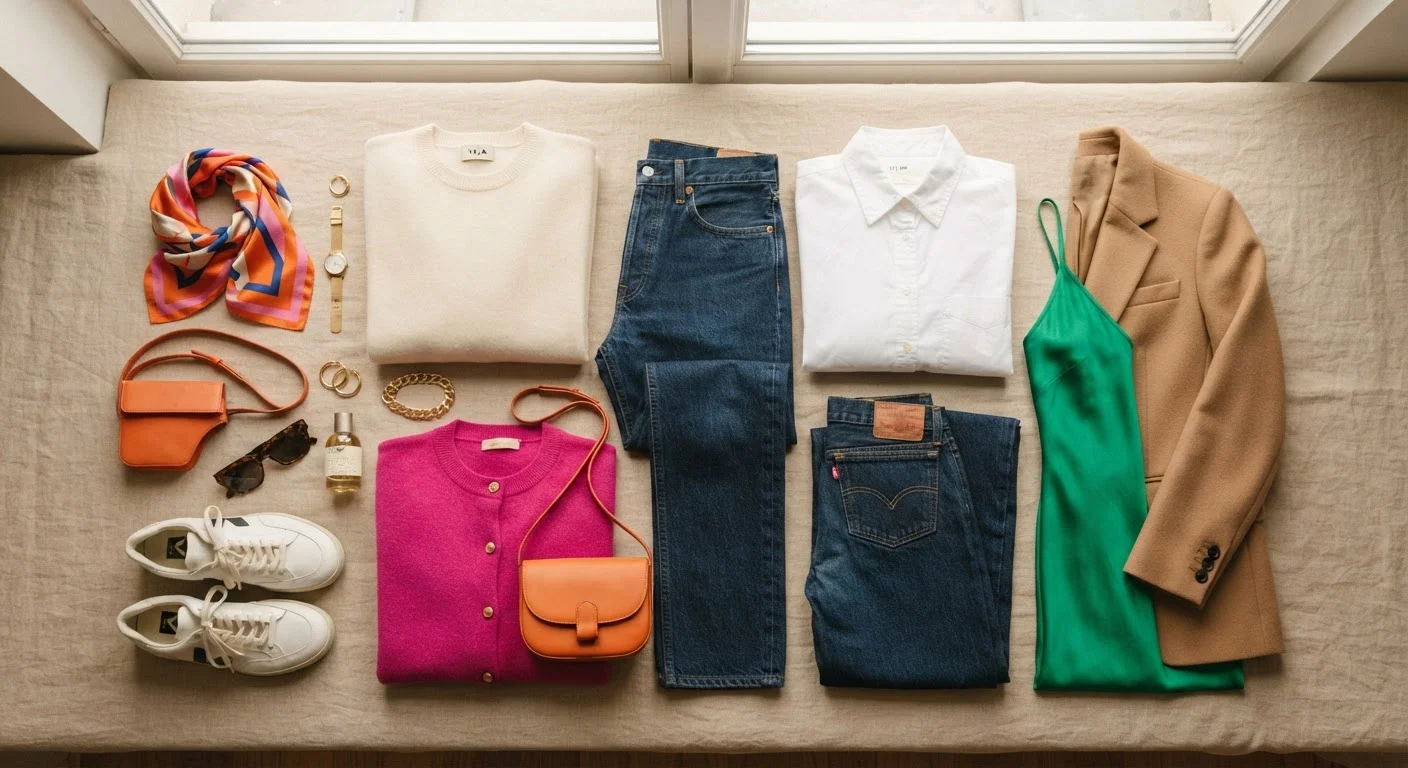
The hybrid approach is where most practical wardrobes thrive. You maintain a stable foundation of personal-style pieces — things that feel authentically yours — and selectively layer in trend items that actually align with your existing aesthetic. This way, you're not starting from scratch every season. For more on building that kind of intentional base, see signature style vs. capsule wardrobe.
The Real Costs of Going All-In on Either Side
Trend Fatigue Is Real
The accelerated pace of micro-trends — driven partly by social media — has made it genuinely harder to distinguish between what you actually like and what the algorithm is surfacing repeatedly. If you find yourself buying things you never end up wearing, that's a useful signal. It may be worth stepping back and reconnecting with what you actually reach for, rather than what felt exciting in a scroll.
Fully surrendering to trend cycles has measurable costs beyond the wallet. Wearing things that don't feel like you can subtly erode confidence — you end up spending mental energy managing an outfit rather than wearing it. If your wardrobe feels like a rotating costume rather than a reflection of who you are, that's a sign worth paying attention to. For a deeper look at why style can start to feel disconnected, why your style might feel stale is worth a read.
On the flip side, rigidly rejecting all trends can lead to a different kind of stagnation. Style is a living thing; most people's tastes evolve naturally over time. Shutting out external input entirely — even from trends you'd ultimately reject — can make it harder to notice when your look has quietly stopped reflecting who you actually are today. Myths about self-expression through style often include the idea that any trend engagement is sellout behavior — which isn't quite right.
Practical Ways to Find Your Balance
Try the 'One Trend, Three Outfits' Test
Before committing to a trend piece, ask yourself: can I style this at least three ways with things I already own? If the answer is yes, it's likely a good fit for your wardrobe. If you're struggling to imagine even one complete outfit, the piece may work better on someone else's aesthetic than yours — and that's completely fine.
A few grounding questions can help clarify where you actually fall on this spectrum:
- When you love an outfit, why do you love it? If the answer is usually about fit, color, or how it makes you feel — that's personal style talking. If it's because something felt exciting and current — that's trend energy, and there's nothing wrong with that either.
- How long do you actually wear a piece? If trend items leave your closet after one season, they're costing more per wear than stable personal-style anchors.
- Does the trend fit your life? A bold runway silhouette that doesn't suit your daily context isn't aspirational — it's impractical. Great style works for your actual life.
You might also consider the broader picture of what your clothing communicates about your values, explored thoughtfully in sustainable self-expression and wardrobe values. And if social context pulls at your choices — what to wear for others versus yourself — dressing for yourself vs. for others addresses that tension directly.
The balance looks different for everyone. What matters is that you're the one setting it — not the algorithm, not the season's color palette.