

Key Takeaways
Why Checkout Surprises Keep Happening
Online retail is designed to get you to the product page first and the full cost last. Item prices are prominent; fees are not. Free shipping banners appear at the top of the page; the fine print about thresholds and exclusions lives in a tooltip or a footer. This isn't accidental — it reflects how attention and purchasing decisions interact.
The result is a gap between what a shopper expects to pay and what they actually pay. According to research on cart abandonment, unexpected costs at checkout are consistently cited as the leading reason shoppers leave without buying. That tells you two things: these surprises are common, and they catch people off guard even at the moment of decision.
Understanding the specific patterns that lead to checkout sticker shock is the most practical way to avoid them. The mistakes below represent the most common ones, along with what drives each and how to sidestep it. For a broader pre-purchase habit, a pre-purchase checklist can help you build a consistent routine before confirming any order.
Total Cost Is What You Actually Pay
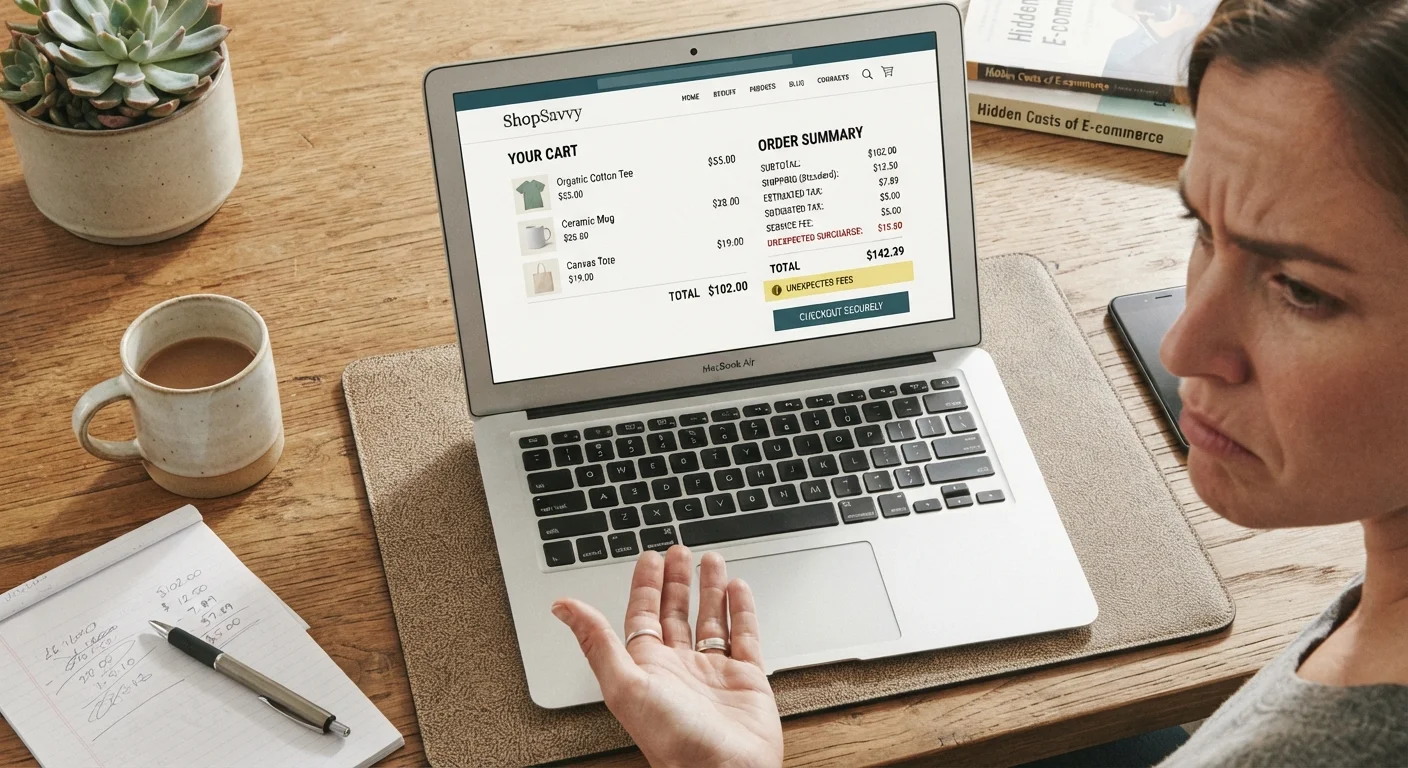
The item price shown on a product page is rarely the number that leaves your bank account. Shipping, handling, taxes, and service fees can add 10–30% or more to an order depending on the retailer and your location. Always confirm the final total before submitting payment — and compare that number, not the listed price, when evaluating whether a purchase makes sense.
Common Checkout Mistakes and How to Avoid Them
These patterns come up repeatedly across categories — from clothing and electronics to household goods and subscriptions. None of them are exotic edge cases; they're built into how most retail checkout flows work.
Spending extra to hit a free-shipping threshold without realizing the extra purchase costs more than shipping would have.
Why it happens: Free shipping feels like a win, and retailers set thresholds just above typical cart values to encourage one more item. The math rarely gets done in the moment.
Missing separate handling or 'processing' fees that appear only on the final checkout screen.
Why it happens: Retailers and marketplaces sometimes display shipping and handling as separate line items, with handling added late in the flow. Shoppers focused on item price often don't notice until they're about to confirm.
Redeeming a discount code that requires a minimum purchase, then spending more than the discount saves.
Why it happens: A '$20 off $100' promotion sounds valuable, but shoppers sometimes stretch a $70 intended purchase to $100 to unlock it — spending a net $10 more than they planned.
Assuming expedited shipping costs are clearly labeled when 'free' shipping applies only to slower options.
Why it happens: Free shipping promotions almost always apply to the slowest delivery tier. Shoppers who need faster delivery and click an expedited option sometimes don't notice the fee was added.
Ignoring return shipping costs when evaluating whether to buy something uncertain.
Why it happens: Return policies often look generous — '30-day returns accepted' — without making clear that the customer pays return postage. That cost only becomes visible when the item needs to go back.
Checkout surprises don't exist in isolation. The same impulse that leads someone to overspend on a shipping threshold is often at work in other shopping contexts. Retail pricing tactics that nudge you to spend more covers the broader psychological landscape behind how prices and promotions are structured to influence behavior.
The Bigger Picture: Small Costs, Real Impact
Each checkout surprise on its own might feel minor — an extra $5 here, an unnoticed $8 handling fee there. But these costs accumulate. A household that shops online frequently and consistently miscalculates total landed cost can end up spending meaningfully more over a year than a simple item-price comparison would suggest.
~70%
Online shopping carts abandoned before purchase
Unexpected shipping costs and fees are consistently ranked as the top reason shoppers abandon carts, according to multiple e-commerce industry studies.
$10–$30
Typical range of expedited shipping fees
Expedited and overnight shipping charges vary widely by retailer and destination, and are frequently added when shoppers switch away from the default free-shipping tier.
1 in 3
Shoppers who overspend to hit free-shipping thresholds
Consumer surveys have found a significant share of online shoppers report adding items they didn't plan to buy in order to qualify for free shipping offers.
This pattern connects directly to how small recurring spending decisions compound over time. Small daily expenses and their long-term financial weight examines how these individually minor costs add up in ways that are easy to underestimate. Similarly, if checkout surprises regularly lead to credit card charges that don't get paid in full, how minimum payments work is worth understanding.
The fix isn't to stop shopping online — it's to build a consistent habit of checking total cost before committing. That means scrolling to the order summary, reading every line item, and running the arithmetic before clicking the final button. It takes an extra 30 seconds and can save real money.
Checkout surprises share common DNA with other purchase-process traps. Car shoppers face similar dynamics at the dealership, where add-ons and financing terms can significantly alter the actual cost of a purchase relative to the advertised price. The same discipline — focus on total cost, not just the headline number — applies in both contexts.