

Key Takeaways
Sale Price
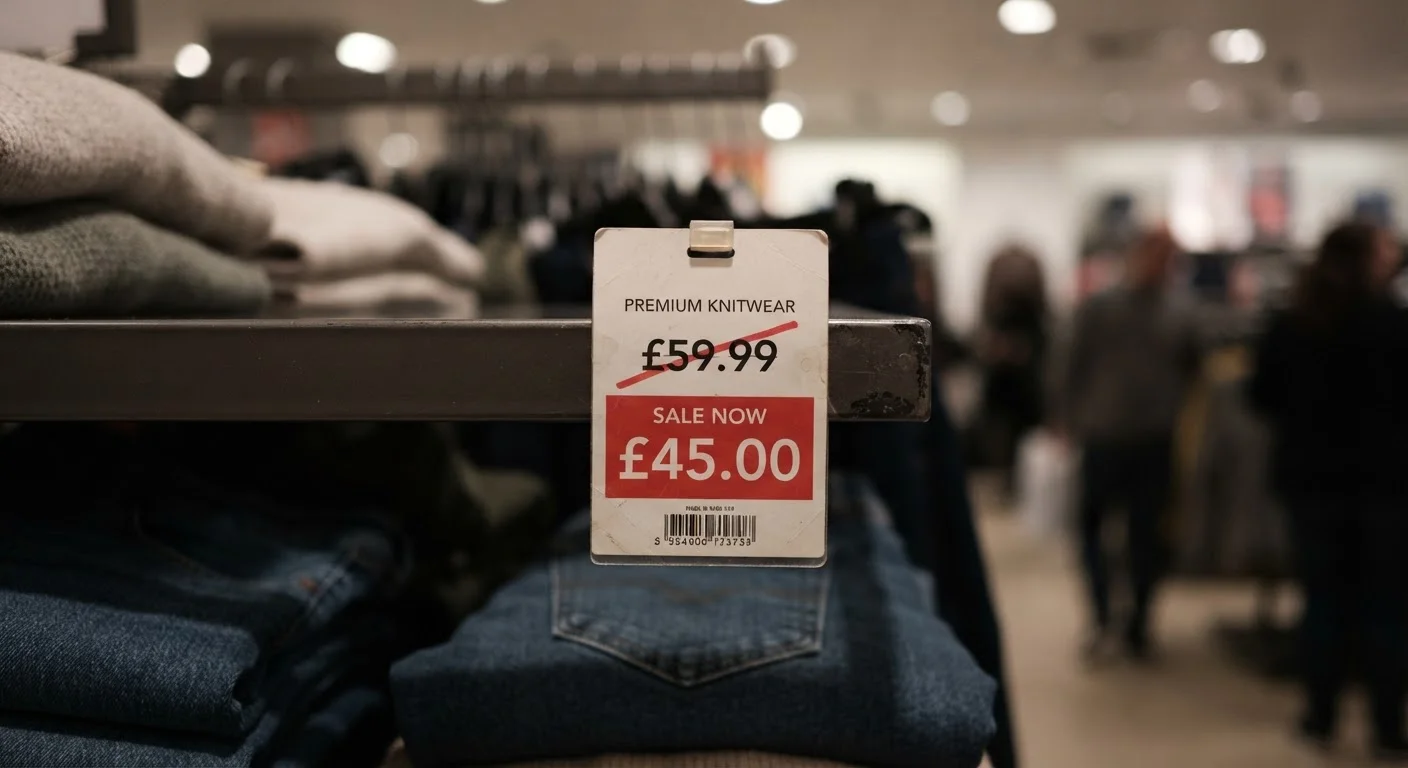
A sale price is the amount a retailer charges for an item after applying a stated discount from a reference price, sometimes called the "original," "regular," or "compare at" price. The implied promise is that you're paying less than you normally would. In practice, however, that reference price may not reflect what the item actually sold for — or ever will sell for — making the apparent savings difficult to verify.
The FTC's Guides Against Deceptive Pricing require that a reference price represent a price at which the item was genuinely offered for sale for a reasonable period. Enforcement and state-level rules vary, and many retailers operate within legal gray areas.
Where the Reference Price Comes From
Every sale tag implies a before-and-after story: the item used to cost more, and now it doesn't. But the "before" number — the reference price — can be sourced from several different places, and retailers aren't always transparent about which one they're using.
Common sources include:
- Manufacturer's Suggested Retail Price (MSRP): A price set by the maker that few retailers actually charge consistently.
- The retailer's own previous price: Valid if the item genuinely sold at that level for a meaningful period — but some retailers inflate a price briefly before marking it down.
- A competitor's listed price: The phrase "compare at" often signals this approach, but competitor prices fluctuate too.
Understanding where the reference number originates is the first step to evaluating whether the discount is real. For a broader look at how anchor prices shape your perception of value, see how retailers use anchor discounts to influence purchasing decisions.
FTC Guidelines on Reference Prices
The Federal Trade Commission's Guides Against Deceptive Pricing state that a retailer's former price used as a reference must have been offered to the public for a reasonably substantial period of time. However, the FTC's guidelines are not automatically enforced case by case, and state-level consumer protection statutes differ in scope and penalties. This article provides general educational information — consult official regulatory sources or a consumer protection attorney for guidance on specific situations.
When a Lower Price Isn't Actually a Saving
Three common situations produce a sale price that doesn't deliver genuine savings:
1. The price was inflated before the sale
Some retailers raise an item's listed price in the weeks before a promotional event, then mark it down to roughly where it was before. The percentage looks dramatic; the actual discount is minimal or nonexistent.
2. The item rarely sold at the reference price
If a product carries a $199 MSRP but routinely sells everywhere for $129, a "sale" at $134 isn't a bargain — it's close to the normal market price with a deceptive label attached.
3. You're buying more than you need
Bulk discounts and multi-buy deals lower the per-unit cost, but only if you use all of what you purchase. Buying three to save on one is a net loss if two go to waste. The unit pricing detail on shelf tags helps you evaluate whether volume pricing genuinely works in your favor.
~33%
Holiday sale items at their lowest price on the actual sale day
An Adobe Analytics review of major U.S. retail events found that roughly one-third of promoted items were at their true low price on the advertised sale date; the remainder had been lower at other points in the year.
60%+
Consumers who say they feel pressured by 'limited time' sale labels
Consumer behavior surveys consistently show a majority of shoppers report urgency cues influence their decision speed, even when they're aware those labels are a marketing technique.
Tools and Habits That Give You Real Price Context
You don't have to rely on the retailer's framing. A few practical approaches restore your informational footing:
- Price history tools: Browser extensions and dedicated sites track how an item's price has changed over time. A product showing its lowest historical price is a more meaningful data point than any markdown label.
- Cross-retailer comparison: Check the same model or item at two or three other sellers before deciding. Sale pricing sometimes simply matches what others charge all the time.
- Check the checkout total, not just the item price: Minimum order thresholds for free shipping, processing fees, and add-ons can erode a discount entirely. The real cost of free shipping and checkout fees is worth reviewing before you reach the payment screen.
Use Price History Before You Decide
Free browser extensions can show you a product's pricing timeline across major retailers, often going back 12 months or more. If the current 'sale' price matches or exceeds where the item typically sits, the markdown label isn't adding useful information. Make price history part of your research routine for any non-trivial purchase.
The same skepticism applies far outside grocery and retail. When evaluating big-ticket purchases like vehicles, the "sale" or "special offer" framing deserves equal scrutiny — see what the numbers actually mean when buying or leasing a car for a comparable breakdown of how framing affects financial decisions.
What 'Savings' Should Actually Mean to You
A genuine saving has two components: the item cost less than it would have otherwise, and you would have purchased it anyway at the higher price. If a sale prompts you to buy something you didn't plan to buy, you haven't saved money — you've spent it, just at a lower per-unit rate.
This distinction matters most during high-pressure retail events when large markdown numbers are designed to feel urgent. Spending decisions grounded in your actual needs, not in a retailer's promotional calendar, are more likely to improve your financial position over time. For context on building that habit into a broader financial picture, the saving and debt guidance hub covers how everyday spending connects to longer-term financial health.
A sale price is a data point, not a verdict. Treat it as a starting reference and check it against evidence — price history, cross-retailer comparisons, and your own purchase intent — before deciding it represents real value.