

| Most popular cruise region (globally) | Caribbean (Cruise Lines International Association (CLIA)) |
| Caribbean season | Year-round |
| Norwegian fjords season | May – September |
| Alaska cruise season | May – September |
| Mediterranean peak season | April – October |
| Typical Caribbean itinerary length | 7 nights |
Why Cruise Regions Matter Before You Book
Choosing a cruise isn't just about the ship — the region shapes everything from climate and port variety to the pace of days at sea. A Caribbean sailing looks almost nothing like a Norwegian fjords voyage or an Asian coastal itinerary. Understanding what each major region delivers helps you match your expectations to the actual experience before you commit to a sailing.
Before diving into regions, it helps to know how cruise itineraries work. See our guide to reading a cruise itinerary for a breakdown of port calls, sea days, and embarkation logistics.
| Most popular cruise region (globally) | Caribbean (Cruise Lines International Association (CLIA)) |
| Caribbean season | Year-round |
| Norwegian fjords season | May – September |
| Alaska cruise season | May – September |
| Mediterranean peak season | April – October |
| Typical Caribbean itinerary length | 7 nights |
The Caribbean: Sun, Sand, and Island Diversity
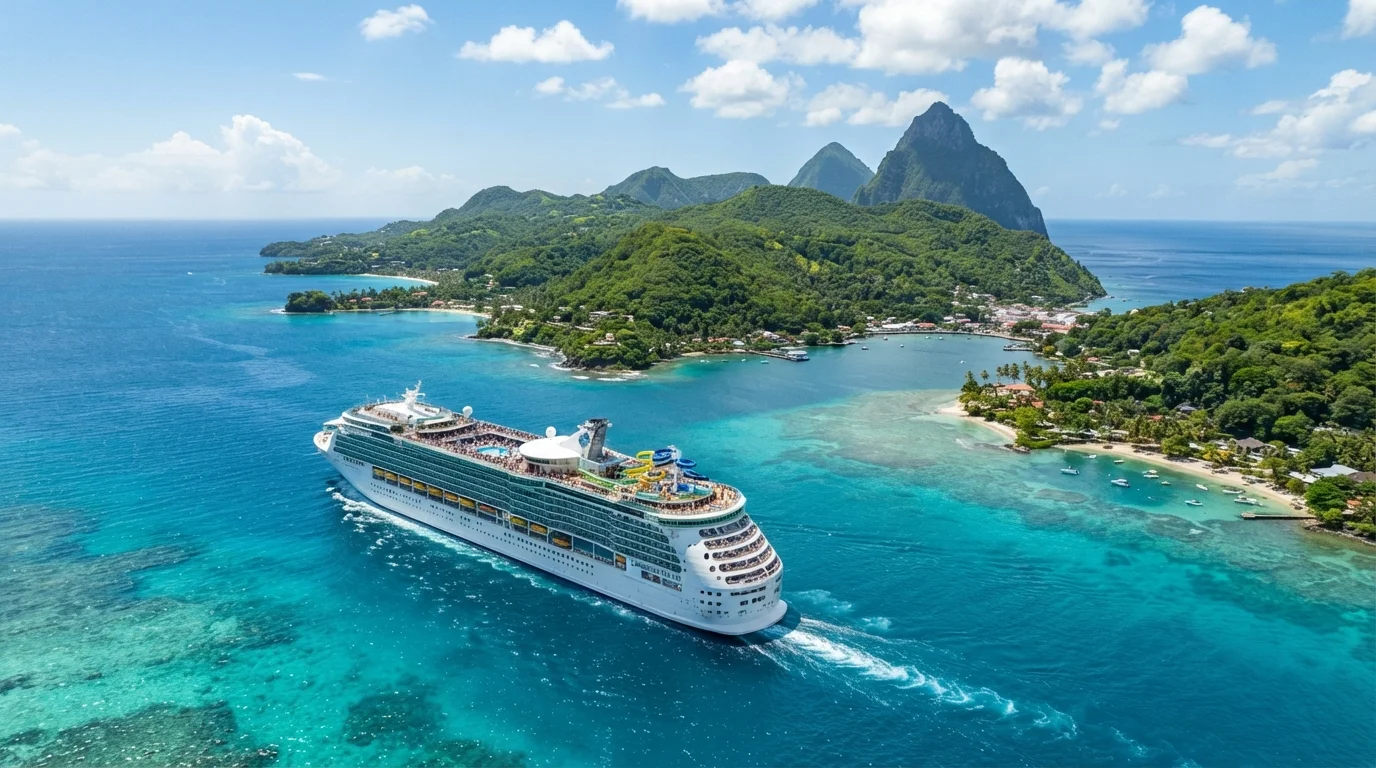
The Caribbean remains one of the most heavily sailed cruise regions in the world, and for good reason. Warm temperatures year-round, short distances between islands, and a wide variety of port experiences make it accessible to first-time and veteran cruisers alike. The region is typically divided into the Eastern Caribbean (including Puerto Rico, St. Maarten, and St. Thomas), the Western Caribbean (featuring Mexico's Yucatán coast, Belize, and Jamaica), and the Southern Caribbean (Aruba, Curaçao, Bonaire).
Each sub-region has a different flavor. The Western Caribbean skews toward Mayan ruins and marine parks; the Southern Caribbean tends to offer calmer seas, less rainfall, and strong Dutch colonial architecture. Most itineraries run 7 nights with four or five port days and two or three sea days — a pace that suits active explorers and beach relaxers equally.
Inside Passage
A coastal waterway stretching from Washington State through British Columbia and into Southeast Alaska. Most Alaskan cruises follow at least part of this route, which is sheltered from open ocean swells by islands and inlets.
Port-intensive itinerary
A cruise schedule that visits a new port almost every day, leaving little time at sea. Common in the Mediterranean and Baltic regions where ports are geographically close together.
Tender port
A port where the ship anchors offshore and passengers travel to land via small boats called tenders, rather than docking directly. Common in smaller or shallow-harbor destinations.
Repositioning cruise
A sailing that moves a ship from one seasonal homeport to another — for example, from the Mediterranean to the Caribbean before winter. These itineraries often cross oceans and include long stretches of sea days.
Sea day
A full day spent at sea with no port stop. Passengers have access to all onboard amenities, and the ship makes progress toward its next destination.
Embarkation port
The starting city and terminal where passengers board the ship at the beginning of a cruise. Also sometimes called the homeport for that particular sailing.
Northern Europe and Norwegian Fjords: Dramatic Landscapes
Northern European cruises typically operate between May and September, when daylight extends well into the evening at higher latitudes. Norwegian fjord sailings — threading between steep cliffs and glacier-fed waterfalls — are among the most visually striking itineraries in the world. Ports like Flåm, Geiranger, and Bergen offer short excursions into villages that feel genuinely removed from mass tourism.
Baltic itineraries pair cities like Stockholm, Copenhagen, Tallinn, and St. Petersburg for a culturally dense, architecture-forward experience. Sailings in this region tend to be port-intensive, sometimes visiting a new destination every day, which suits travelers who prefer structure and sightseeing over long sea days.
7
UNESCO-listed Norwegian fjords
Norway's fjord landscape holds multiple UNESCO World Natural Heritage designations, underscoring its global significance.
3
Main Caribbean sub-regions
Eastern, Western, and Southern Caribbean each offer distinct port types, climates, and cultural experiences.
5–7
Months in Alaska cruise season
Alaska's cruise window is limited by seasonal weather and typically runs May through September.
Alaska: Wilderness, Wildlife, and Glaciers
Alaskan cruises run from roughly May through September, following either the Inside Passage or a Gulf of Alaska route. Both deliver encounters with tidewater glaciers, forested coastline, and an impressive range of wildlife — including humpback whales, sea otters, and brown bears — visible from the ship or on shore excursions. Ports such as Juneau, Ketchikan, and Skagway each offer distinct personalities, from gold rush history to rainforest hikes.
Alaska is a region where sea days carry real weight — glacier viewing from the deck often ranks as the itinerary highlight. Travelers who prefer outdoor adventure over beach relaxation tend to find this region particularly rewarding. For a comparison of ship sizes and styles suited to this environment, see our breakdown of cruise ship categories.
Southeast Asia and the Pacific: Cultural Depth and Variety
Southeast Asian cruise itineraries typically encompass ports across Vietnam, Thailand, Singapore, Malaysia, Japan, and Indonesia. The region rewards curious travelers who value cultural immersion — temples, street food markets, and ancient cities — alongside natural scenery like limestone karst bays and volcanic islands. Sailings vary considerably in length, with some shorter regional loops and others forming part of longer world voyage segments.
Japan-focused itineraries have grown substantially in popularity, offering ports in Tokyo, Kyoto-adjacent Kobe, Hiroshima, and smaller coastal towns. It's worth noting that Southeast Asia can challenge travelers unfamiliar with heat, humidity, or complex local customs. Our article on who thrives in Southeast Asia offers an honest look at what the region demands. Travelers moving ships between regions should also explore repositioning cruises, which frequently transit through Asian waters.
Visa and Entry Requirements Vary Widely
Southeast Asia spans multiple countries, each with its own entry rules, visa policies, and health requirements. What's true for one port may not apply to the next port on the same itinerary. Always check current requirements through the official government sources for each country you'll visit, and confirm directly with your cruise line before departure.
The Mediterranean: History, Cuisine, and Coastal Beauty
The Mediterranean remains one of the most culturally rich cruise regions globally. Western Med itineraries anchor in ports like Barcelona, Rome (Civitavecchia), Florence (Livorno), and Marseille. Eastern Med sailings cover Greece, Turkey, Croatia, and sometimes the Holy Land. The sailing season peaks from April through October, with summer months bringing the warmest weather and the busiest ports.
Because distances between ports are relatively short, Med itineraries are typically port-heavy, leaving limited sea time. Travelers who want continuous sightseeing in one region often describe the Mediterranean as the most satisfying cruise destination in terms of shore content. For those interested in exploring European waterways further inland, our article on ocean vs. river cruising explains how the two experiences compare.
This article provides general travel information. Entry requirements, seasonal conditions, and itinerary specifics vary by provider and time of travel. Always verify current conditions with official government and cruise line sources before booking.