

Key Takeaways
Motorhome Classifications (Class A, B, and C)
Motorhomes are self-propelled recreational vehicles that combine a living space and drivetrain in one unit. The RV industry divides them into three classes - A, B, and C - based on the type of chassis the vehicle is built on and the overall size of the living space it provides. These classes help buyers, dealers, and campground operators quickly understand what kind of vehicle they're dealing with.
Class designations are industry conventions, not federal regulatory categories. They were developed in part through industry bodies such as the Recreation Vehicle Industry Association (RVIA), and specific dimensions vary by manufacturer and model year.
How the Classification System Works
When someone refers to a "Class A" or "Class C" motorhome, they're using a classification system developed by the RV industry - primarily through organizations such as the RVIA - to group self-propelled recreational vehicles by chassis type and overall form factor. These aren't federal regulatory categories; they're industry conventions that have become standard shorthand for dealers, campgrounds, and buyers alike.
All three classes share the same defining trait: the engine, cab, and living quarters are integrated into one vehicle. That distinguishes them from towable RVs like travel trailers or fifth wheels. For a broader look at ownership models, see our motorhome vs. towable RV comparison.
26-45 ft
Typical Class A motorhome length range
Lengths vary by chassis and floor plan; diesel pusher models often reach the longer end of this range.
16-22 ft
Typical Class B campervan length range
Built within a standard van body, Class B lengths are constrained by the van platform used as a base.
20-33 ft
Typical Class C motorhome length range
Class C coaches fall between Class A and Class B in size, built on a cutaway van or truck chassis.
Class A: Large Coaches Built for Comfort
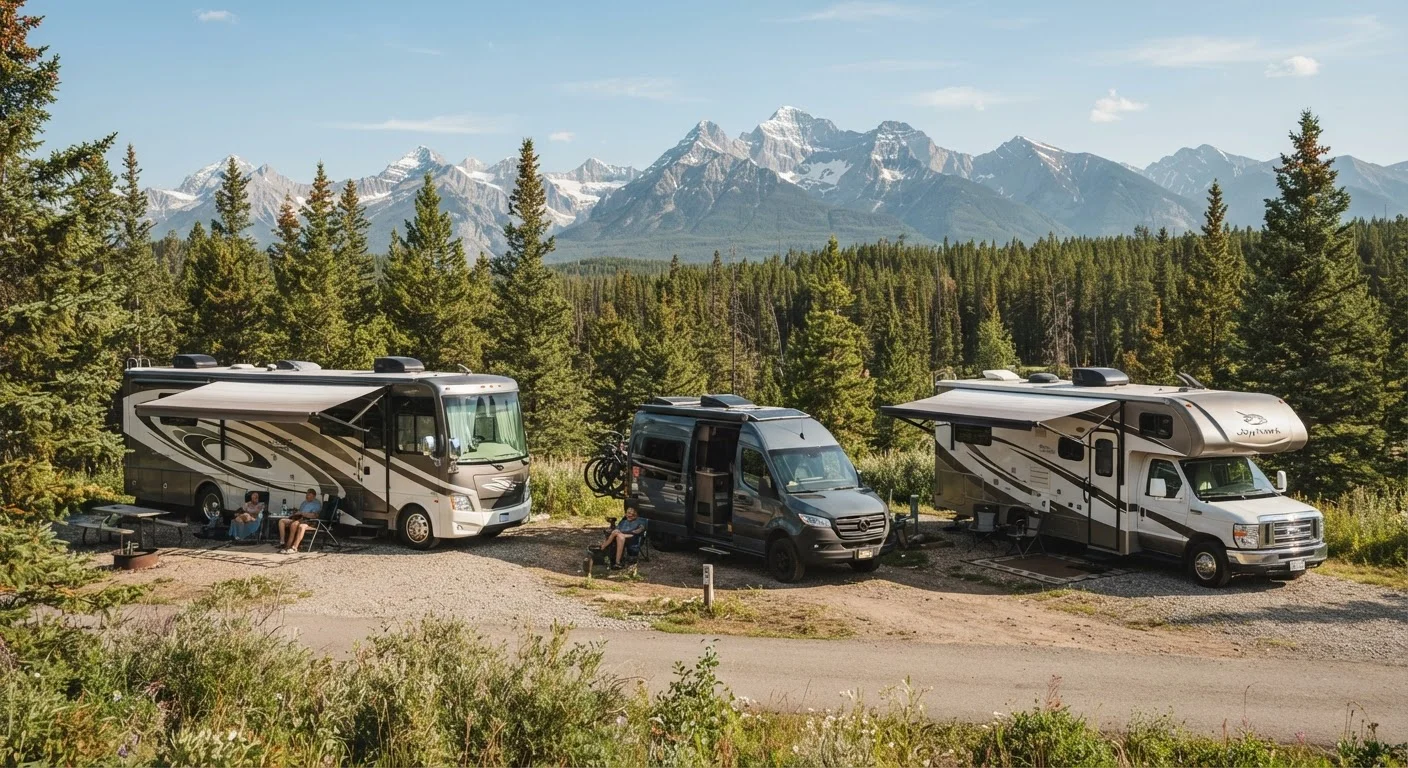
Class A motorhomes are the largest type on the road, built on either a commercial bus chassis or a heavy-duty truck chassis. This gives them a boxy, flat-front silhouette. Lengths typically run from around 26 to 45 feet, and gross vehicle weight ratings (GVWR) can exceed 30,000 pounds on diesel-powered models.
Interiors commonly feature full-height ceilings, slide-out sections that expand the floor plan when parked, full bathrooms, and full kitchens. Because of their size, Class A motorhomes require careful route planning - low-clearance bridges and narrow campground roads warrant extra attention. Drivers should verify whether their state requires a special license endorsement for vehicles above a certain weight.
Class B: The Compact Camper Van
Class B motorhomes - commonly called campervans - are built entirely within the body of a full-size cargo van. Manufacturers work within that existing van shell, raising the roof in some models to add headroom and installing compact versions of standard amenities: a sleeping area, small kitchen, and sometimes a wet bath.
Lengths typically run from about 16 to 22 feet, and most Class B vehicles handle similarly to a large pickup truck. That maneuverability suits travelers who want to move between campgrounds and urban areas without the logistical demands of a larger rig. The trade-off is genuine: Class B interiors are tight, particularly for two people on longer trips.
Class C: The Mid-Size Motorhome
Class C motorhomes are built on a cutaway chassis - usually derived from a van or light truck - with the cab section left intact and a living unit constructed behind and over it. The most recognizable feature is the cab-over section: an extension that reaches above the cab, typically used as a sleeping area or storage space.
Lengths commonly range from about 20 to 33 feet. Class C motorhomes tend to offer more living space than a Class B while remaining more maneuverable than most Class A coaches - a combination that makes them a popular choice for families. For context on how vehicle weights affect licensing and safety, see the article on vehicle weight classes.
Choosing the Right Class for Your Needs
There's no universally correct motorhome class. The right choice depends on group size, travel frequency, campground type, and driving comfort. A solo traveler who values flexibility and easy parking has different needs than a family planning extended summer trips.
Before shopping, it pays to understand common RV terminology - the RV ownership glossary defines terms like dry weight, GVWR, and slide-outs that appear in nearly every motorhome spec sheet. If you're still weighing a motorhome against a towable option, the guide to common RV buying myths separates fact from the assumptions that often shape first-time buyer decisions.