

Key Takeaways
Vehicle Weight Classes
Vehicle weight classes are standardized categories that group vehicles by their maximum allowable weight when fully loaded. These ratings — established by federal transportation agencies — affect towing limits, licensing requirements, fuel economy standards, and road regulations. Understanding where your vehicle falls in this system helps you operate it safely and legally.
The Federal Highway Administration (FHWA) defines eight weight classes based on Gross Vehicle Weight Rating (GVWR), ranging from Class 1 (under 6,000 lbs) to Class 8 (over 33,000 lbs).
The Eight Federal Weight Classes, Explained
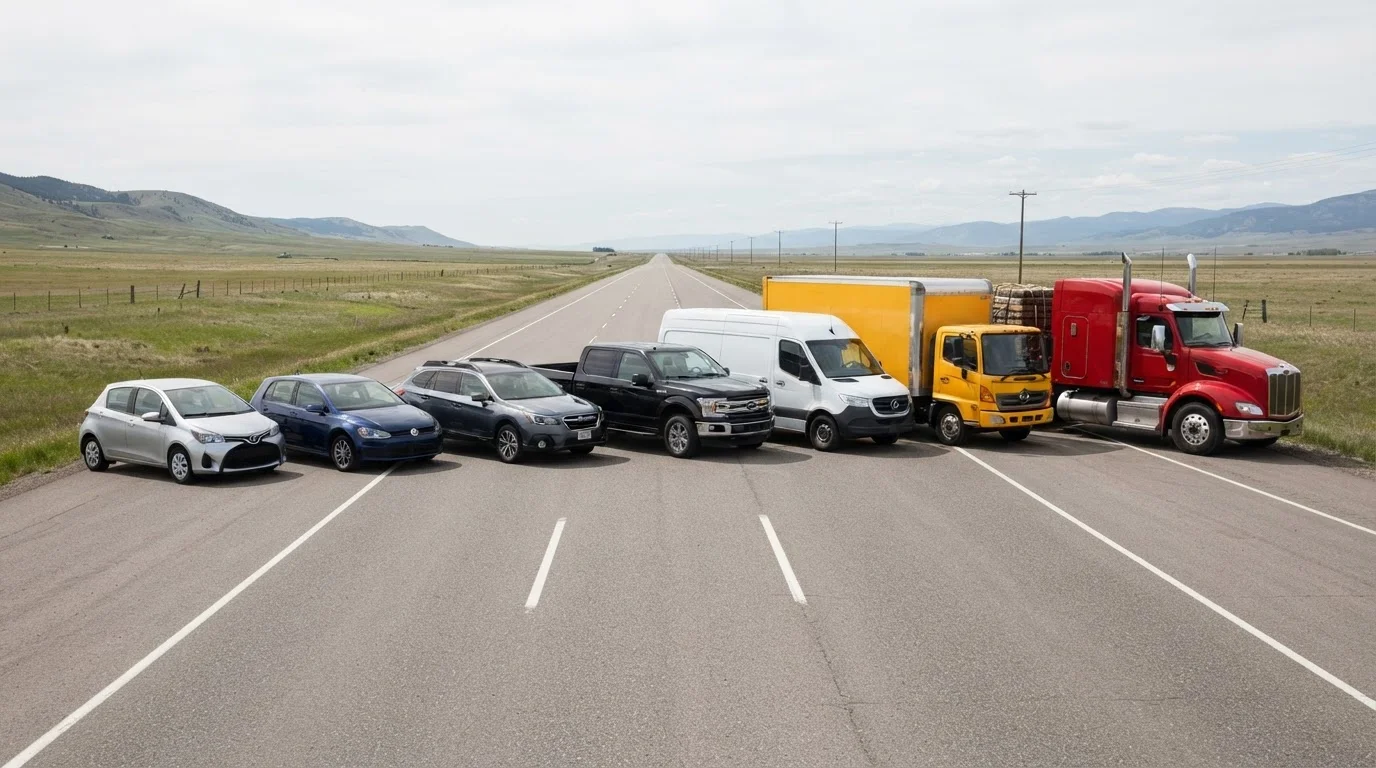
The FHWA divides all on-road vehicles into eight classes based solely on GVWR — the maximum loaded weight the manufacturer certifies as safe. Here's how the breakdown looks in practical terms:
- Class 1 (0–6,000 lbs): Small pickups, compact SUVs, and most passenger cars.
- Class 2 (6,001–10,000 lbs): Full-size half-ton pickups, larger SUVs, and some vans. Class 2b (8,501–10,000 lbs) is where many heavy-duty half-tons sit.
- Class 3 (10,001–14,000 lbs): One-ton trucks, large cargo vans, and some Class C motorhomes.
- Class 4–5 (14,001–19,500 lbs): Medium-duty trucks, larger work vans, and many box trucks.
- Class 6–7 (19,501–33,000 lbs): City delivery trucks, school buses, and larger motorhomes often land here.
- Class 8 (over 33,001 lbs): Tractor-trailers and the heaviest commercial vehicles.
For most everyday owners, Classes 1 through 3 are the relevant range. If you're driving an RV, understanding where it falls matters quite a bit — see our guide to Class A, B, and C motorhomes for how motorhome sizing maps to these weight tiers.
Class 1–3
Weight classes covering most consumer vehicles
The Federal Highway Administration's eight-class system places the vast majority of personal-use trucks, SUVs, and vans within the first three classes.
26,001 lbs
GVWR threshold triggering CDL requirements
Federal regulations generally require a Commercial Driver's License for vehicles exceeding this GVWR when operated in commerce, though state rules vary.
10–15%
Typical tongue weight as share of trailer weight
Industry guidance generally recommends trailer tongue weight fall between 10 and 15 percent of total loaded trailer weight to maintain stable towing dynamics.
Key Weight Terms Every Owner Should Know
Weight class alone doesn't tell the whole story. Several related ratings each mean something distinct — and mixing them up is one of the most common mistakes vehicle owners make.
- Curb Weight
- The weight of the vehicle as it sits empty, with a full fuel tank but no passengers or cargo.
- Gross Vehicle Weight Rating (GVWR)
- The maximum total weight allowed — curb weight plus everything you add: people, gear, fuel, and tongue weight from a trailer.
- Payload Capacity
- The difference between GVWR and curb weight. This is how much you can actually load into the vehicle.
- Gross Combined Weight Rating (GCWR)
- The maximum combined weight of your loaded vehicle and a loaded trailer. This is the number that governs towing safety.
- Tongue Weight
- The downward force a trailer's hitch exerts on your vehicle. It counts toward your payload — a detail many people overlook.
For a broader reference on these terms, especially if you're in the RV space, the RV ownership glossary covers these and dozens of related ratings in one place.
Find Your Vehicle's Weight Ratings in Seconds
Your vehicle's GVWR, payload capacity, and other weight ratings are printed on a label affixed to the driver's door jamb — often called the 'tire and loading information' placard. The owner's manual also lists these figures. Never rely solely on advertising copy or verbal descriptions when making towing or loading decisions.
Why These Numbers Matter in Real Life
Weight class and its associated ratings aren't just bureaucratic categories — they shape everyday decisions in concrete ways.
Safety
A vehicle's braking system, suspension, and tires are engineered to handle loads up to its GVWR. Loading beyond that rating reduces braking effectiveness and can cause handling instability. This is especially critical when towing. Our article on RV towing capacity risks explains how exceeding weight limits creates real danger on the road.
Licensing
In most U.S. states, operating certain weight-class vehicles — particularly above 26,000 lbs GVWR in commercial contexts — requires a Commercial Driver's License. Requirements vary by state, so verify with your local DMV before assuming your standard license covers a large rental truck or recreational vehicle.
Registration and Fees
Weight class often determines how a vehicle is categorized for registration purposes. Heavier classes frequently carry higher annual fees, and some states have separate titling categories for commercial-weight vehicles.
Fuel Economy and Emissions Standards
Federal fuel economy and emissions rules apply differently by weight class. Light-duty vehicles (Classes 1–2) fall under EPA passenger vehicle standards; heavier classes face separate commercial vehicle standards. This affects what engine options manufacturers offer and how fuel efficiency is reported.
If you're evaluating trucks specifically, understanding how light-duty vs. heavy-duty truck classifications translate into real capability differences is the logical next step. And for matching any vehicle type to your actual use case, see matching a vehicle to how you use it.