

Key Takeaways
RV Holding Tanks
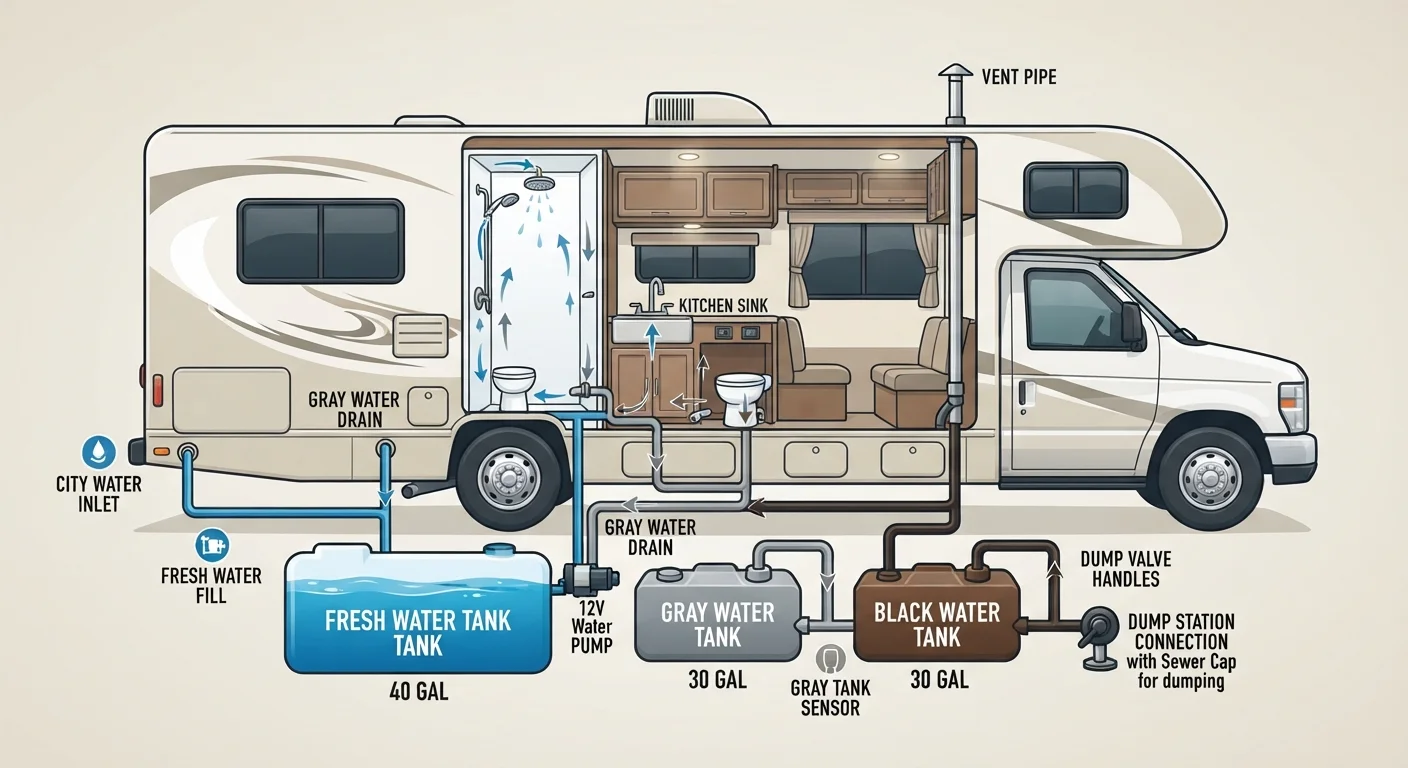
RV holding tanks are the onboard reservoirs that store water in three categories: fresh water for drinking and cooking, gray water from sinks and showers, and black water from the toilet. Each tank is a separate, sealed container that must be monitored and managed independently. Understanding how they work is fundamental to safe, sanitary RV travel.
Tank capacities vary widely by RV class and floor plan - a Class A motorhome may carry 100+ gallons fresh and 50+ gallons black water, while a small travel trailer might hold as little as 20 gallons in each tank.
The Three-Tank System Explained
Every RV equipped with onboard plumbing operates three separate water systems, and confusing them - even once - can create a messy, expensive, or even hazardous situation. The good news is that the logic behind each tank is straightforward once you see the big picture.
The fresh water tank stores potable water - the water you drink, cook with, and use at the bathroom sink. It's filled from a campground water spigot, a hose bib, or carried in via jugs. The gray water tank collects wastewater from your kitchen sink, bathroom sink, and shower. The black water tank holds the output from the RV toilet exclusively. These three systems never overlap, and each has its own fill point, drain valve, and set of maintenance requirements.
For a broader look at RV terminology across all systems, the complete RV ownership glossary is a useful companion reference.
20-100+
Typical fresh water tank capacity range (gallons)
Tank sizes vary significantly by RV class and floor plan; Class A motorhomes often carry the largest reserves while small travel trailers carry the least.
3-5 days
Average interval between black tank dumps
This estimate assumes average occupancy and water use; actual frequency depends on tank size, number of occupants, and daily habits.
11.5M+
RV-owning households in the United States
According to the RV Industry Association, RV ownership reached record levels in recent years, reflecting the growing demand for mobile camping infrastructure knowledge.
Fresh Water: Supply and Sanitation
Your fresh water tank is your onboard supply when you're not connected to a campground's water hookup (called shore water or city water). When connected to shore water, most RVs bypass the tank entirely and run water directly from the external supply - though you can also fill the tank from shore water for later use.
Fresh tank capacity typically ranges from 20 gallons in smaller travel trailers to well over 100 gallons in larger motorhomes. The key maintenance concern here is sanitation: water sitting in a tank for weeks or months can develop bacterial growth. Most manufacturers recommend sanitizing the fresh tank with a diluted bleach solution at the start of the camping season and after long-term storage. Flushing and refilling thoroughly afterward is equally important.
Sanitize Your Fresh Tank Each Season
Before your first trip of the year, sanitize your fresh water tank using the method outlined in your RV owner's manual - typically a diluted bleach solution followed by a thorough flush. This is especially important after the rig has sat unused through winter. Potable water safety is not an area to cut corners.
When boondocking - camping without any hookups - your fresh water supply is your most finite resource. Conserving water through quick showers and turning off the tap while brushing teeth can meaningfully extend how long you stay off-grid.
Gray Water: The Middle Ground
Gray water is often misunderstood. Because it doesn't contain toilet waste, some RVers assume it can be disposed of casually - but that's not the case in most camping environments. Gray water contains soap, grease, food residue, and microorganisms that can impact soil and water quality.
On regulated campgrounds and RV parks, gray water must go to a designated dump station, just like black water. On some dispersed federal land, gray discharge may be permitted under specific conditions, but those rules vary and should be verified before any ground discharge.
The gray tank fills faster than most first-timers expect - especially with multiple people showering daily. Dish soap and food particles can also create odor issues over time. Enzyme-based drain treatments marketed for RV gray tanks can help break down residue and keep smells manageable.
Gray Water Regulations Vary by Location
There is no single national standard for gray water disposal from RVs. National parks, state parks, Bureau of Land Management areas, and private campgrounds each set their own rules. Before assuming gray water can be discharged on the ground, verify the specific regulations for your campground or dispersed camping area.
Black Water: Handling Waste the Right Way
The black water tank is the system that gets the most attention - and rightly so. It stores human waste from the RV toilet and must be handled carefully at every stage: during use, when adding treatment, and especially when dumping.
Using a tank treatment product (chemical or enzyme-based) is strongly recommended after every dump to help liquefy solids, control odor, and keep the tank's level sensors accurate. A common mistake is dumping the black tank too frequently when it's mostly empty - partial loads make it harder to flush solids out completely. Many experienced RVers recommend waiting until the tank is at least two-thirds full before dumping to ensure adequate flushing action.
When dumping, always drain the black tank first, then the gray - the relatively cleaner gray water helps flush the dump hose. Wear gloves, use a quality sewer hose with secure connections, and never leave a sewer hose permanently connected to a full-hookup site with the black valve open, as this encourages solids to pyramid inside the tank.
If you're new to all of this, renting an RV before buying is an excellent way to get hands-on experience managing these systems before committing to ownership.
Winterizing and Long-Term Storage
When camping season ends, all three tanks need attention before your RV goes into storage. Water left in any tank during freezing temperatures can expand and crack lines, valves, or the tanks themselves - repairs that can be costly and disruptive.
Winterizing typically involves draining all three tanks completely, blowing out water lines with compressed air or running RV-safe antifreeze through the system, and leaving valves open so any residual moisture can drain. The black tank may benefit from a final flush and enzyme treatment before storage to prevent dried solids from adhering to the walls.
For a full walkthrough of what's involved, winterizing your RV properly covers the complete process in detail. Skipping these steps is one of the more common - and preventable - causes of costly off-season damage.
Understanding your holding tanks is one of those unglamorous but genuinely important aspects of RV ownership. Once the process becomes routine, it takes only a few minutes at each dump station - and it keeps your rig sanitary, your campmates comfortable, and your systems running well for the long term. Common RV myths often include the idea that tank management is complicated - in practice, it quickly becomes second nature.