| VIN Standardization Year | 1981 (17-character format mandated) (NHTSA federal regulation) |
| Pre-1981 VIN Lengths | Varied - typically 11 to 13 characters depending on manufacturer |
| Common Build Sheet Locations | Under seat cushions, inside door panels, beneath carpet, in trunk area |
| Key Matching Components | Engine block, transmission case, rear axle housing |
| Trim Tag Typical Location | Firewall, door jamb, or cowl area |
| Decoder Resources | Manufacturer-specific registry clubs and marque enthusiast organizations |
Why VINs and Build Sheets Matter for Classic Cars
When evaluating any classic vehicle, the paperwork trail can be as important as the physical condition. A VIN confirms a car's factory identity - its body style, engine, model year, and assembly plant. A build sheet goes further, recording the exact options and colors specified for that individual vehicle on the production line.
Together, these documents form the foundation of what collectors call authenticity. A car presented as a high-performance factory original is only as credible as the documentation supporting that claim. For buyers new to the hobby, the complete guide to buying your first classic car covers how documentation fits into the broader purchase decision.
| VIN Standardization Year | 1981 (17-character format mandated) (NHTSA federal regulation) |
| Pre-1981 VIN Lengths | Varied - typically 11 to 13 characters depending on manufacturer |
| Common Build Sheet Locations | Under seat cushions, inside door panels, beneath carpet, in trunk area |
| Key Matching Components | Engine block, transmission case, rear axle housing |
| Trim Tag Typical Location | Firewall, door jamb, or cowl area |
| Decoder Resources | Manufacturer-specific registry clubs and marque enthusiast organizations |
Reading a Pre-1981 VIN
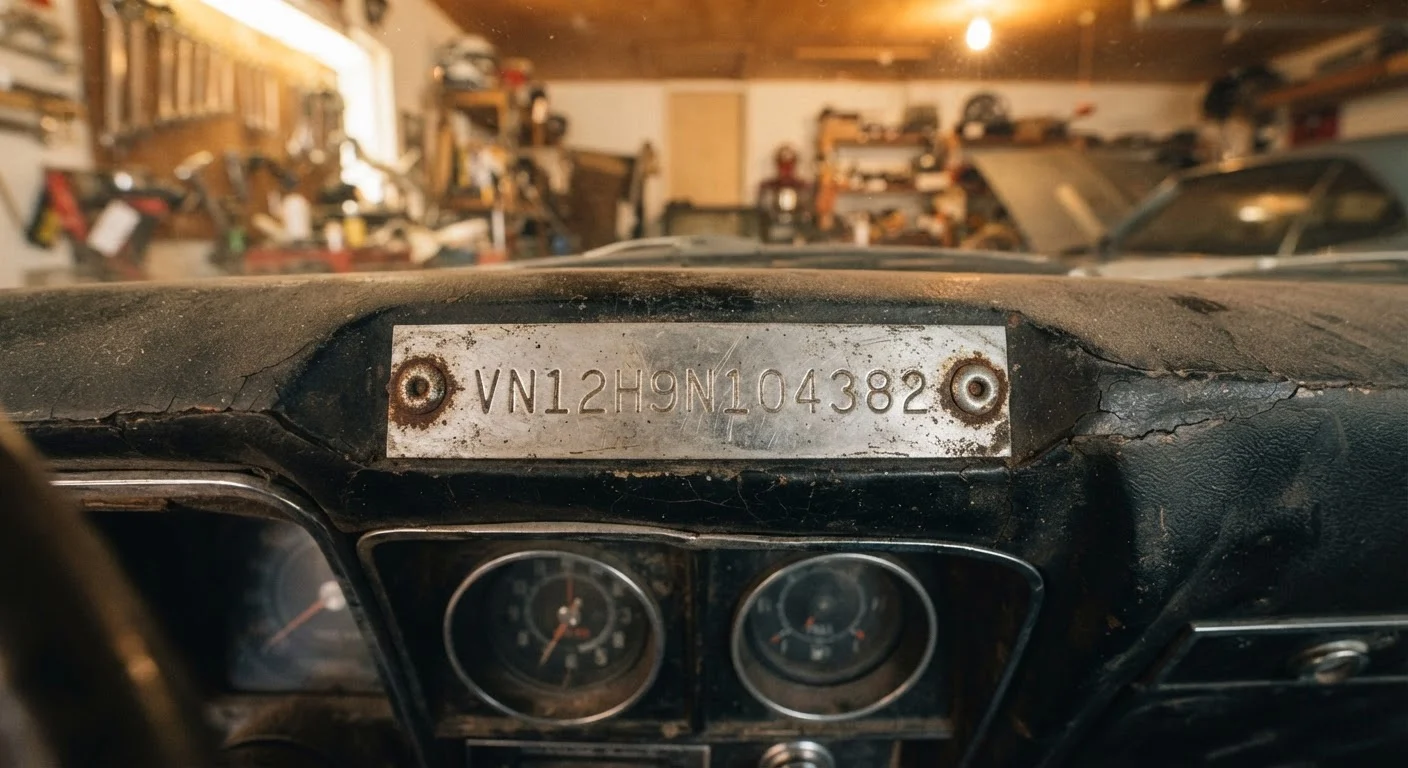
Unlike modern vehicles, which share a uniform 17-character VIN format mandated by the NHTSA, pre-1981 vehicles use manufacturer-specific formats. Decoding them requires knowing the make, model year, and the particular encoding scheme the manufacturer used during that production era.
Despite the variation, most vintage VINs encode a consistent set of data across their characters:
- Division or make identifier - usually the first character or two
- Body style or series - mid-string characters indicating coupe, convertible, sedan, etc.
- Engine code - a single character representing the factory-installed engine type
- Model year - encoded as a letter or number, varying by manufacturer and era
- Assembly plant - identifies the factory where the vehicle was built
- Sequential production number - the vehicle's place in the production run
The VIN stamped on the dashboard plate should also appear as a partial or full stamp on the engine pad and firewall. Mismatches between locations are a significant red flag and warrant careful investigation before purchase. See also the pre-purchase inspection checklist for how VIN verification fits into a structured evaluation.
Pre-1981 VINs Are Not Universal
Before federal standardization, each manufacturer used its own VIN format. A 1969 Chevrolet VIN encodes information differently than a 1969 Ford or Mopar product. Always use a marque-specific decoder - a generic tool will produce unreliable results. Dedicated registry clubs and enthusiast organizations typically publish the most accurate decoding guides for their respective makes.
Understanding the Build Sheet and Trim Tag
The build sheet - sometimes called a broadcast sheet - was a working factory document, not designed for preservation. Many were discarded after assembly or left inside the car during production. Surviving examples are typically found tucked beneath seat cushions, inside door panels, or under carpet. Locating one is a fortunate discovery that can substantively confirm original equipment.
The trim tag (or cowl tag) is a more durable alternative. This small metal plate was riveted to the car at the factory and records paint color codes, interior trim codes, body style, and often the build date. While less detailed than a full broadcast sheet, trim tags survive on a much higher percentage of vehicles.
VIN
Vehicle Identification Number - a unique alphanumeric code assigned to a vehicle at the factory. Pre-1981 VINs were not standardized and vary in length and format by manufacturer and model year.
Build Sheet
A factory document listing the specific options, colors, trim levels, and equipment installed on an individual vehicle during production. Also called a window broadcast sheet or assembly sheet.
Matching Numbers
A term describing a classic vehicle whose major drivetrain components - engine, transmission, and sometimes rear axle - still carry the original date codes and casting numbers that correspond to the car's production records.
Date Code
A stamped or cast marking on an engine block, carburetor, or other component indicating when that part was manufactured. Used to verify whether components are period-correct.
Trim Tag
A small data plate, typically riveted to the firewall or door jamb, that records factory-installed paint color, interior color, body style, and build sequence information.
Broadcast Sheet
An internal factory production document, often found tucked under seat cushions or carpet, used by assembly line workers as a guide for building a specific vehicle. Often used interchangeably with 'build sheet.'
When cross-referencing a trim tag against a VIN decode, look for consistency in body style, model year, and assembly plant. Discrepancies don't automatically indicate fraud - components were sometimes replaced under warranty - but each inconsistency should be explained and documented. The article on classic car value myths addresses how documentation claims are sometimes overstated in the market.
Matching Numbers: What It Actually Means
The phrase matching numbers is one of the most used - and most misunderstood - terms in classic car collecting. Strictly defined, it means the engine block's partial VIN stamp or suffix code, the transmission, and often the rear axle all carry date codes and casting numbers consistent with the vehicle's known production date and original factory specifications.
Key things to understand about matching numbers:
- An engine assembled after the car's production date cannot be a factory-original unit - date codes on major components should precede or closely align with the vehicle's build date.
- Not every component needs to be original for a car to have value; partial documentation can still be meaningful.
- Casting numbers, suffix codes, and partial VIN stamps are all distinct types of identification - a knowledgeable marque specialist can explain which applies to a specific vehicle.
If you're sourcing replacement components and want to maintain accuracy, the article on finding reliable classic car parts covers how to approach period-correct sourcing.
For context on how classic documentation compares to modern vehicle records, the vehicle history report guide explains what today's digital records do and don't capture - a useful contrast when working with pre-digital era cars.
This article is for informational and educational purposes only. Values, authenticity determinations, and documentation assessments for specific vehicles should be evaluated by a qualified marque specialist or independent appraiser.