Key Takeaways
Why European Automotive History Matters to Modern Enthusiasts
European classic motoring is not a single tradition - it is a layered conversation between nations, engineers, and economic forces that unfolded across more than a century. Understanding the major eras helps enthusiasts make more informed decisions about which vehicles resonate with them, and why. Before exploring these periods, it is worth noting that definitions of what qualifies as a "classic" vary considerably. For a thorough breakdown of those distinctions, see what makes a car a classic.
Each era below reflects not only a design aesthetic but also a broader engineering philosophy - from hand-crafted coachwork to the democratization of performance. Recognizing these contexts enriches the ownership experience and informs responsible collecting.
The Edwardian and Vintage Era (Pre-1930)
Before the Great Depression reshaped the global economy, European automakers were producing vehicles of extraordinary individual craftsmanship. In Britain, France, Germany, and Italy, coachbuilders collaborated with chassis manufacturers to create bespoke grand tourers intended for wealthy clientele undertaking extended journeys across the continent.
Engineering at this stage was experimental and courageous. Supercharged engines, shaft-drive systems, and independent front suspension all made their debuts during this period. Racing events such as the Targa Florio and early Le Mans helped manufacturers refine their understanding of reliability under sustained stress. Vehicles from this era are today among the rarest and most demanding to maintain, requiring specialist knowledge that is increasingly difficult to find.
Coachbuilt craftsmanship and race-derived engineering defined European motoring before the Depression reshaped everything.
The Pre-War Classic Period (1930-1939)
The 1930s produced what many historians consider the apex of pre-war automotive elegance. Economic pressures paradoxically encouraged some manufacturers to consolidate resources into fewer, more technically ambitious models. Streamlining influenced body design as aerodynamics began to be taken seriously, not merely for aesthetics but for genuine performance benefit.
German manufacturers made significant technical strides during this decade, with independently sprung all four wheels appearing on production cars and supercharged engines achieving outputs that would remain impressive for decades. Meanwhile, Italian coachbuilders reached a creative zenith, producing flowing bodywork that treated the automobile as sculpture. French luxury marques refined interior appointments to extraordinary levels. These vehicles represent the last expression of truly hand-built European motoring before wartime disrupted everything.
The 1930s balanced economic pressure with technical ambition, producing some of the most beautiful pre-war automobiles ever built.
Post-War Reconstruction and the Economy Car (1945-1955)
Europe emerged from World War II with shattered infrastructure, rationed materials, and populations in urgent need of affordable transport. This constraint produced a distinctive design philosophy: small, efficient, and durable. The resulting vehicles - produced across Britain, France, Germany, and Italy - were not compromises so much as purposeful solutions to real problems.
Air-cooled rear engines, unit-body construction, and torsion-bar suspension appeared across multiple manufacturers simultaneously as engineers sought weight and cost savings. Some of these economy platforms proved so fundamentally sound that they remained in production for decades. Alongside the economy car movement, small specialist manufacturers began producing lightweight sports cars using available mass-market components - an approach that would evolve significantly through the 1950s.
Post-war scarcity forced European engineers to produce vehicles of remarkable efficiency - constraints that yielded durable, enduring designs.
The Sports Car Renaissance (1955-1965)
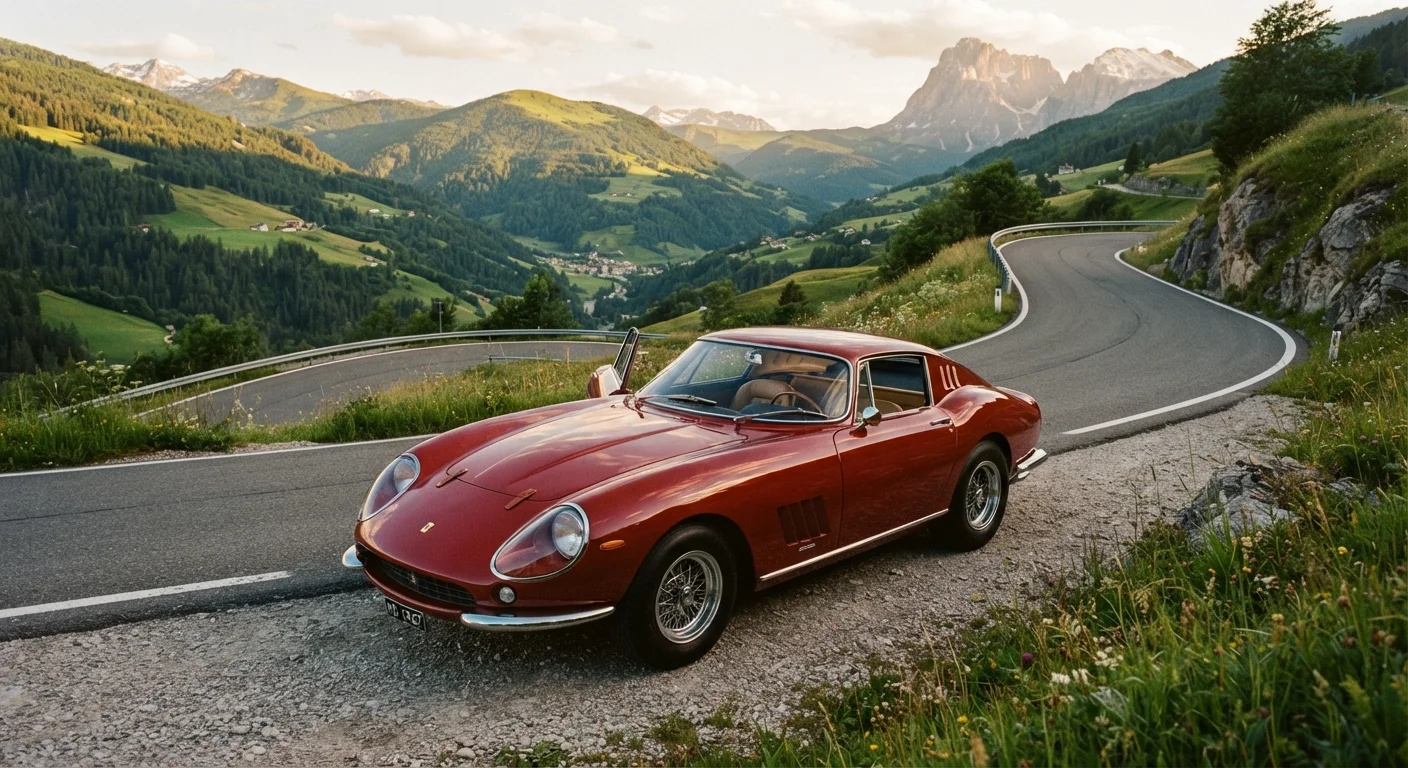
By the mid-1950s, European economies had recovered sufficiently to support a flourishing sports car culture. Manufacturers across Britain, Italy, and Germany invested heavily in motorsport programs, and the technology developed on the circuit flowed directly into road cars with unusual speed. Disc brakes, independent rear suspension, fuel injection, and monocoque construction all entered mainstream production during this decade.
British manufacturers in particular cultivated a global reputation for affordable, driver-focused sports cars. Italian coachbuilders and manufacturers produced grand touring coupes of outstanding visual sophistication. This era is often cited by collectors as representing the most compelling balance between accessible mechanical simplicity and genuine driving engagement - qualities that remain appealing to first-time classic buyers today.
Motorsport investment in the late 1950s and early 1960s brought genuine racing technology to European production road cars.
The Performance and Safety Transition Era (1966-1979)
The late 1960s and 1970s brought a new set of pressures to European manufacturers: tightening emissions regulations, the 1973 oil embargo, and an emerging safety movement all demanded adaptation. Performance did not disappear - it evolved. Turbocharged engines began appearing in production vehicles, and mid-engine layouts migrated from pure race cars into road-going sports cars.
This era also saw a significant increase in German engineering prominence on the world stage, with compact executive saloons demonstrating that performance and refinement could coexist in a daily-driven package. For collectors, 1970s European vehicles often occupy an interesting space: they are increasingly eligible for classic status under many definitions, parts availability is generally better than for older vehicles, and driving dynamics are more compatible with modern traffic. Before pursuing a purchase in this era, a structured inspection is advisable - see the pre-purchase inspection checklist for a systematic approach.
The 1970s proved that European performance engineering could adapt to regulation without abandoning the qualities collectors value most.
Choosing an Era That Fits Your Interests and Capabilities
No single era is objectively superior - each carries unique rewards and practical challenges. Pre-war vehicles demand specialized knowledge and parts sourcing patience; post-war sports cars require vigilance around rust and electrical systems; 1970s cars may need emissions compliance research depending on your state. If you are new to the hobby, this guide for first-time classic car buyers walks through how to match an era to your skill level and resources.
Collectors should also weigh the ongoing debate between preserving factory originality and upgrading for reliability - a discussion explored in depth in the originality versus restomod debate. For a complete picture of what classic ownership realistically entails - financially and mechanically - this overview of classic vehicle ownership rewards and costs is a valuable companion read.
Align Your Era Choice With Parts Availability
Parts availability varies dramatically between eras. Post-war economy cars and 1960s-1970s sports cars generally benefit from active specialist supplier networks and club registries. Pre-war and early post-war vehicles may require fabrication or international sourcing. Research parts ecosystems for any specific model before committing to a purchase - this is one of the most consequential practical factors in long-term ownership satisfaction.
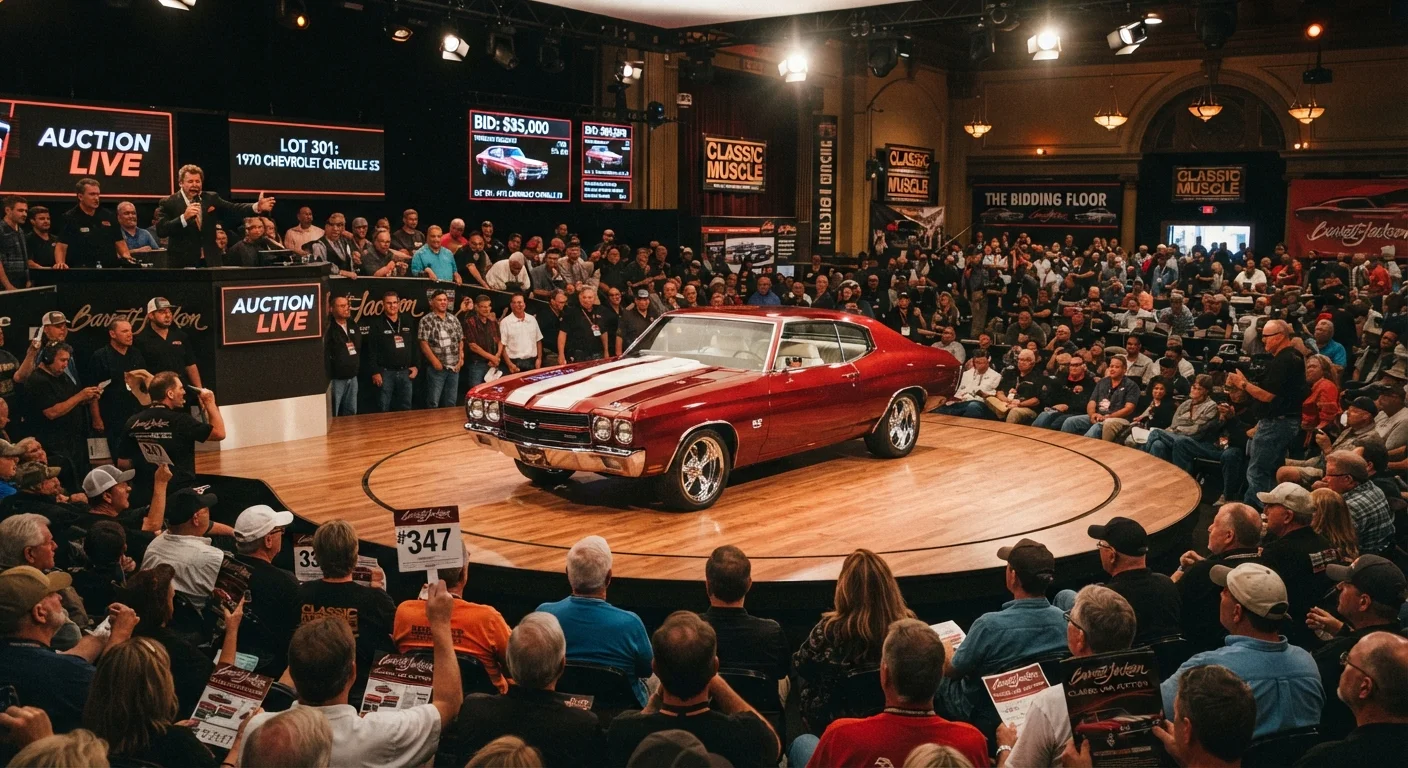
European classics developed in parallel with American performance culture, though the philosophies diverged significantly. The American muscle car era offers a useful contrast in priorities: displacement and straight-line power versus the European emphasis on chassis balance and circuit-derived engineering.
This article is intended for general informational and educational purposes. Valuations, parts availability, and ownership costs vary considerably and should be verified through qualified specialists before making purchasing decisions.