Key Takeaways
Defining the Muscle Car
The term muscle car is used broadly, but it has a reasonably precise meaning in automotive history. A true muscle car is generally defined as an American-made, two-door intermediate or full-size vehicle equipped with a large-displacement, high-output V8 engine - engineered specifically for straight-line performance and sold at an accessible price point to everyday buyers.
This distinguishes the muscle car from the pony car (a smaller, sportier platform like the original Ford Mustang) and from exotic or purpose-built sports cars, which were typically priced far beyond the average working American's reach. The muscle car was democratic performance: factory horsepower available at a local dealership.
If you're comparing this uniquely American phenomenon to its contemporaries abroad, it helps to understand the very different engineering philosophies explored in European classic motoring.
Origins: How It All Started
The story of the muscle car begins in the mid-1950s, when American automakers were locked in an accelerating horsepower race. The 1955 Chrysler C-300 - equipped with a 300-horsepower Hemi engine in a full-size body - is widely cited as an early ancestor of the genre. Pontiac's 1957 Fuel Injection V8 options and Chevrolet's high-performance small-block experiments from the same period further seeded the performance culture.
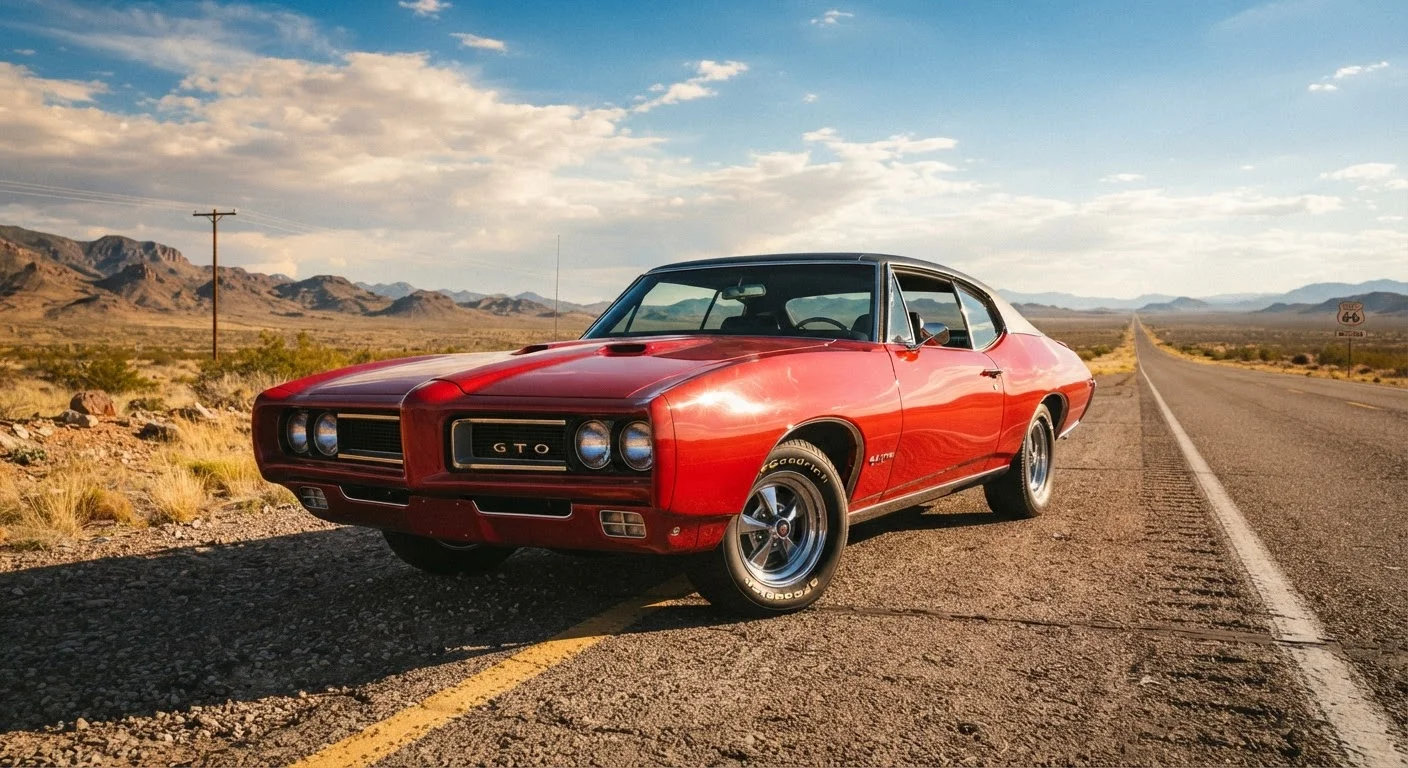
The pivot moment most historians point to is the 1964 Pontiac GTO. Pontiac engineers, working around General Motors' internal policy restricting engine displacement in intermediate cars, installed a 389-cubic-inch V8 into the mid-size Tempest LeMans and offered it as an option package. The result was an accessible, fast automobile that the enthusiast press embraced immediately. It became a template the entire industry followed.
1964
Year the modern muscle car era is widely said to begin
Most automotive historians mark the introduction of the Pontiac GTO option package as the genre's practical starting point.
454 cu in
Peak factory displacement available in some GM vehicles
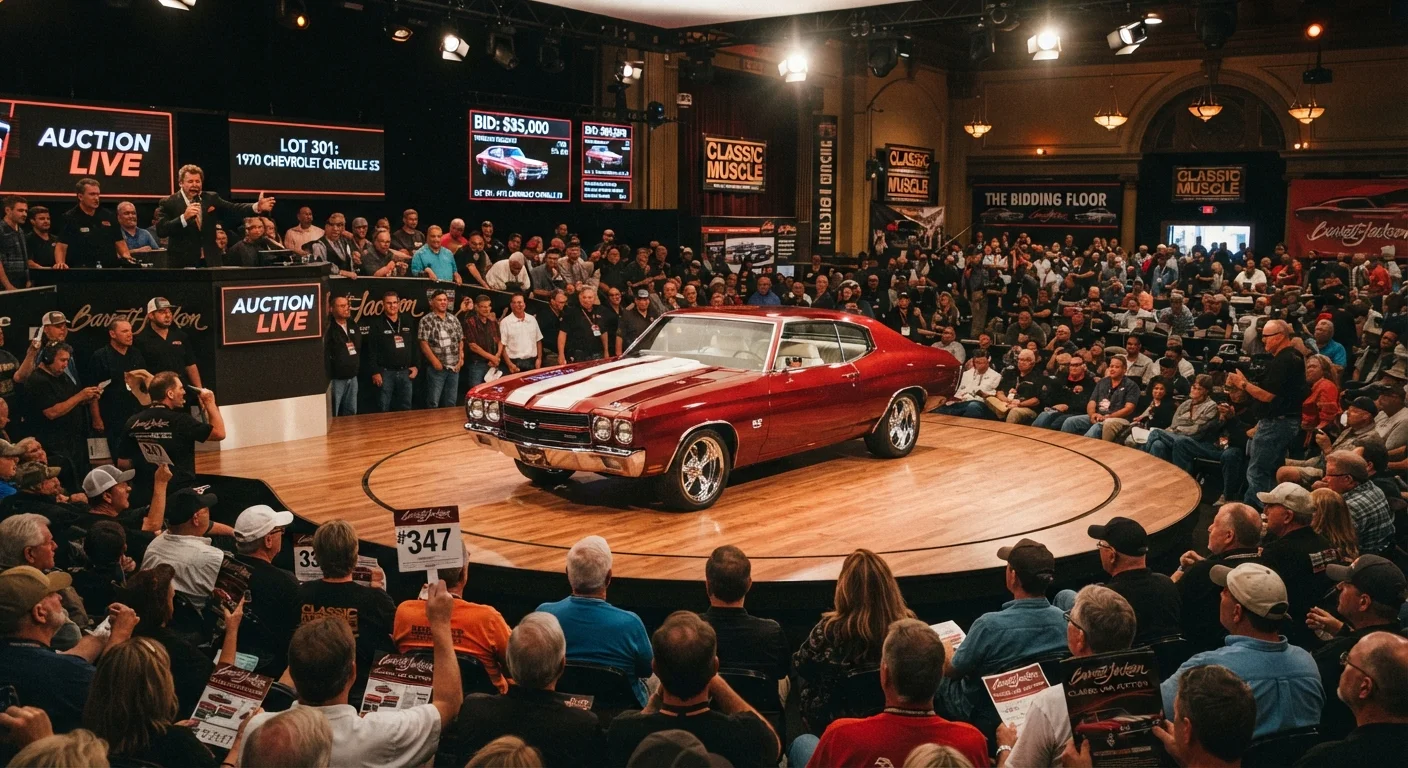
By 1970, Chevrolet offered a 454-cubic-inch V8 in the Chevelle SS, representing the upper limit of the horsepower race.
~9 years
Span of the muscle car golden age
The concentrated peak of the era ran from approximately 1964 through 1972, before regulatory and economic forces reshaped the market.
The Golden Age: 1964-1971
From 1964 onward, virtually every major American manufacturer introduced competing models. Ford answered with the Mustang (1964½) and later the Torino GT and Cobra. Chrysler fielded the Dodge Charger, Plymouth Road Runner, and the legendary 426 Hemi-powered vehicles. General Motors offered the Chevrolet Chevelle SS, Buick GS, Oldsmobile 442, and the Pontiac GTO in successive, increasingly powerful iterations.
Displacement figures climbed steadily. By the late 1960s, production engines displacing 426, 428, 429, 440, and even 454 cubic inches were available from the factory. Advertised horsepower figures - which manufacturers are now widely acknowledged to have understated during this period to avoid insurance rate increases - routinely reached 375 to 450 bhp on street-legal vehicles.
When evaluating a muscle car from this era, request the vehicle's build sheet or broadcast sheet if one survives - these factory documents confirm original options and engine codes and are a key authenticity marker.
Reproduction parts and engine swaps are common in the classic market; original documentation is one of the few verifiable ways to confirm a vehicle's true factory configuration.
Pay close attention to the VIN (Vehicle Identification Number) decoder for any vehicle you're considering - each digit encodes the model year, engine, assembly plant, and production sequence, and inconsistencies between the VIN and the physical car are a significant red flag.
Numbers-matching authenticity is a primary value driver in the muscle car market, and the VIN is the starting point for any serious verification process.
The period also produced some of the most visually distinctive American automotive design: long hoods, short rear decks, aggressive grilles, hood scoops, and bold color options that were deliberately intended to communicate performance at a glance.
What Ended the Era
The muscle car era did not end in a single event but rather under converging pressures that accumulated quickly between 1970 and 1973.
- Insurance costs: By the early 1970s, insurers had begun rating high-performance vehicles significantly higher, making ownership expensive for younger buyers - the core demographic.
- Federal emissions regulations: The Clean Air Act of 1970 imposed tightening standards that required engine modifications (lower compression ratios, revised timing) which meaningfully reduced output figures.
- Federal safety regulations: New mandates added weight to vehicles and placed constraints on design.
- The 1973 oil embargo: The OPEC oil embargo caused fuel prices to spike sharply and shifted consumer demand toward economy and efficiency. Large-displacement V8s became difficult to justify practically or politically.
By the 1974 model year, power figures across the segment had dropped substantially. Many iconic nameplates survived in name only - applied to far less potent vehicles. The original formula was effectively retired.
Cultural Legacy and Collector Appeal
The American muscle car era left an impression on popular culture that has never fully faded. Films, music, and automotive journalism of the late 1960s and early 1970s treated these vehicles as symbols of freedom, youth, and raw American industrial capability. That cultural weight has translated directly into sustained collector demand across decades.
Documented, numbers-matching examples - meaning vehicles retaining their original engine, transmission, and major drivetrain components - command meaningful premiums in the collector market. However, prospective buyers should approach value claims with informed skepticism. The myths surrounding classic car values are plentiful, and not every bold claim about rarity or provenance holds up to scrutiny.
The community itself is active and opinionated. One ongoing conversation involves whether a classic muscle car should remain factory-original or be updated with modern components for reliability and drivability - a debate explored in depth in the discussion of originality versus restomod philosophy.
Entering the Hobby Today
For enthusiasts considering their first muscle car purchase, the landscape is both exciting and demanding. High-profile examples from the peak era - particularly factory high-option, documented survivors - carry significant price tags. More accessible entry points exist in the form of lower-trim variants, vehicles requiring restoration, or later second-generation muscle from the mid-1970s and early 1980s.
Before committing to a purchase, understanding every stage of classic car ownership is essential. Mechanical inspection, title research, rust assessment, and parts availability are all factors that vary significantly by model and year. Equally important is understanding the full picture of ongoing costs - storage, insurance, maintenance, and restoration work - covered in detail in our guide to classic vehicle ownership rewards and real costs.
The muscle car era represents one of the most concentrated periods of performance engineering in American automotive history. For those who approach it with preparation and realistic expectations, ownership of one of these vehicles remains a genuinely rewarding experience.