

Key Takeaways
OEM, OE-Equivalent, and Aftermarket Parts
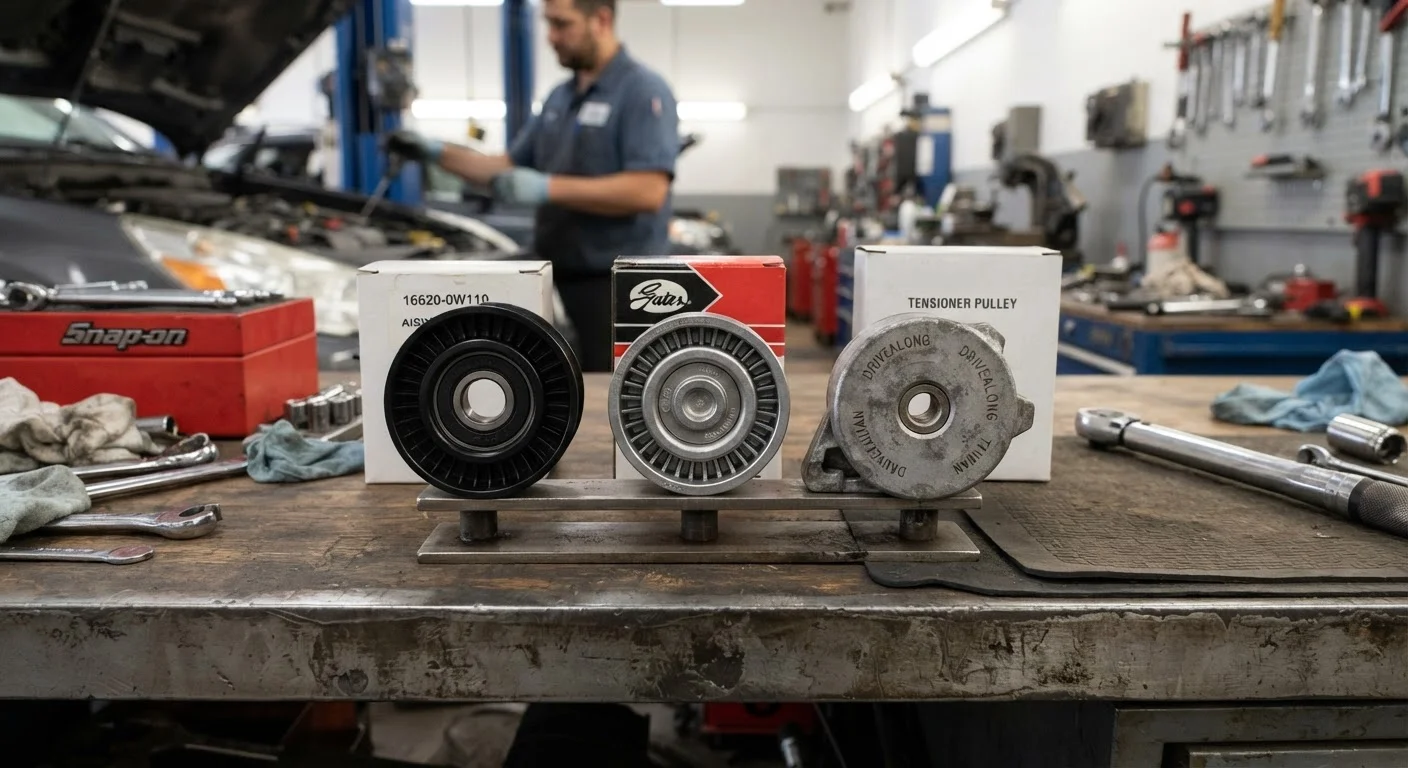
When a vehicle needs a replacement part, three broad categories exist: OEM (Original Equipment Manufacturer) parts made by or for the automaker, OE-equivalent parts built to match factory specifications by independent suppliers, and aftermarket parts produced by third-party manufacturers that may differ in materials, tolerances, or design. Each category involves different trade-offs between price, fit, and quality. Understanding these distinctions helps you make an informed decision before authorizing any repair.
Many OEM parts are themselves manufactured by Tier 1 suppliers — the same companies that often sell 'OE-equivalent' parts under their own brand. The part may be identical; the packaging and price point differ.
What OEM Actually Means
OEM stands for Original Equipment Manufacturer. In the context of vehicle repair, an OEM part is one that either carries the automaker's brand or was produced to the automaker's exact specifications for use in new vehicles coming off the assembly line. When you take your car to a franchised dealership for repairs, the shop will typically use OEM parts by default.
OEM parts come with a guarantee of fit and function because they are, by definition, the same type of component that was installed when the vehicle was built. They are also generally the most expensive option, and that premium reflects brand assurance, packaging, and the dealer supply chain — not always the manufacturing cost alone.
If you see an OEM part on a repair estimate and want to understand what else is listed, the repair estimate guide breaks down each line item in detail.
The Supplier Overlap You Should Know
A common industry reality is that the same factory producing a part for an automaker's OEM supply chain also sells functionally identical parts under its own brand label at a lower price. This is well-documented across categories including filters, brake components, and lighting. Knowing the manufacturer — not just the label — is often the most useful piece of information when evaluating a part.
OE-Equivalent: The Middle Ground
OE-equivalent parts occupy a well-established middle ground. These are components produced by independent suppliers — often called Tier 1 suppliers — engineered to meet the same dimensional tolerances, materials specifications, and performance requirements as the factory-installed original. Crucially, many of these suppliers are the exact same companies that produce parts sold under the automaker's OEM label.
The practical difference is often in the branding and the price. An OE-equivalent brake caliper from a well-known supplier may be functionally identical to the OEM version and sell for noticeably less. For non-safety-critical components such as trim pieces, filters, or sensors, OE-equivalent parts from established manufacturers represent a sensible value.
~$500B
U.S. automotive aftermarket annual size
The Auto Care Association estimates the U.S. automotive aftermarket at roughly $500 billion, reflecting how central independent parts and service are to vehicle maintenance nationwide.
3 in 4
Repairs done outside the dealership
Industry research consistently shows the majority of vehicle repairs and maintenance services in the U.S. are performed at independent shops rather than franchised dealerships, where aftermarket and OE-equivalent parts are commonly used.
Consumers comparing replacement-part categories will find the OE-equivalent tier directly analogous to the general question of when a generic product matches its name-brand counterpart — and when it doesn't.
The Aftermarket Spectrum: Wide Range, Variable Quality
The aftermarket category is the broadest and the most variable. It encompasses everything from well-engineered performance components to economy parts with significantly looser tolerances. Unlike OE-equivalent parts, many aftermarket parts are not designed to replicate the OEM specification exactly — they may use different materials, have different dimensions, or be engineered for a specific performance outcome (such as higher heat resistance in brake pads).
This variability means the aftermarket label alone tells you relatively little about quality. A reputable aftermarket manufacturer that certifies its products through organizations such as the Automotive Aftermarket Suppliers Association (AASA) or meets SAE standards is very different from a low-cost import with no traceable quality certification.
Verify Quality Certifications Before Approving a Part
When a shop proposes an aftermarket part, ask whether it meets SAE standards or carries certification from a recognized industry body. For safety-critical components — brakes, suspension, airbag modules — this question is especially important. A reputable shop should be able to answer it without hesitation.
For vehicles with an established parts heritage — including classic cars — the aftermarket is often the primary or only source of available components. The guide to sourcing classic vehicle parts covers this topic in depth.
How Part Choice Affects Warranties and Total Ownership Cost
Part category decisions don't exist in isolation — they connect directly to warranty coverage and long-term ownership costs. Under the federal Magnuson-Moss Warranty Act, automakers generally cannot void a factory warranty solely because an aftermarket or OE-equivalent part was used, unless a causal link to the failure can be demonstrated. However, individual extended warranty contracts and certified pre-owned agreements may carry stricter terms. Always verify before authorizing work.
From a total-cost perspective, a less expensive part that fails prematurely can ultimately cost more than the OEM alternative once labor is factored back in. Part cost is only one variable; installation labor, expected service life, and any downstream damage from a part failure all factor into the real equation. This connects to the broader picture of what vehicle ownership actually costs over time.
“The aftermarket exists because competition drives down costs — but it only works in the consumer's favor when quality standards are enforced and transparent. The label is less important than knowing who made the part and to what specification.”
— Automotive industry analyst commentary, Industry observer, aftermarket supply chain research
This article provides general information about vehicle parts categories and is not a substitute for advice from a qualified mechanic or automotive professional regarding your specific vehicle or repair situation.