

Key Takeaways
Expedition and Polar Cruising
Expedition cruising refers to voyages aboard small, specially equipped ships designed to reach remote, wild, or environmentally sensitive destinations — including Antarctica, the Arctic, Patagonia, and uninhabited coastlines. Unlike conventional cruise sailings, these trips prioritize exploration, wildlife encounters, and scientific education over onboard entertainment and resort-style amenities. Polar cruising is a subset of expedition cruising focused specifically on high-latitude destinations above the Arctic Circle or below the Antarctic Convergence.
Many expedition vessels carry an International Association of Antarctica Tour Operators (IAATO) certification and are built to Polar Class or equivalent ice-strengthened hull standards, enabling safe navigation in partially frozen waters.
Why Expedition Cruising Is a Different Animal Entirely
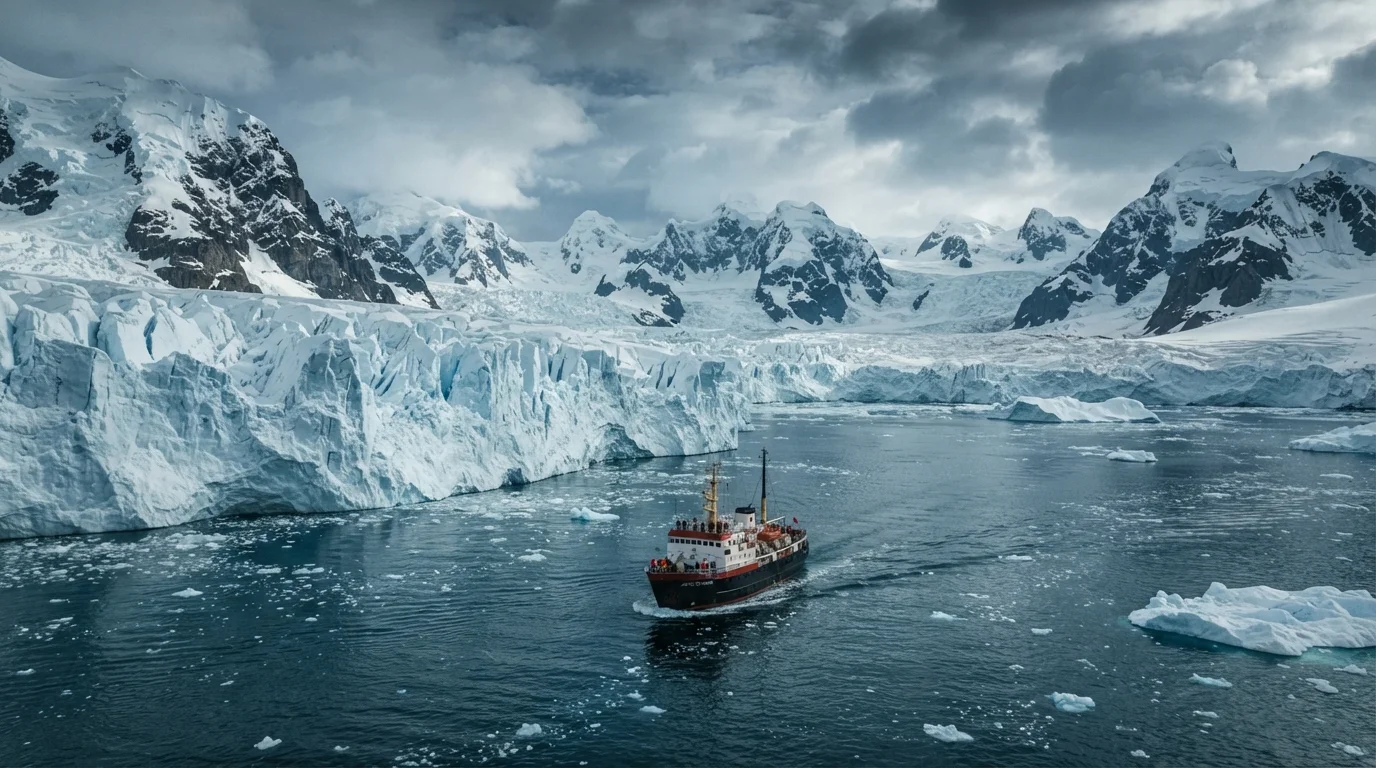
Scroll through a mainstream cruise brochure and you'll find poolside bars, Broadway-style shows, and a port-a-day schedule through well-charted waters. Now picture a 150-passenger ice-strengthened vessel nosing through a narrow Antarctic channel while humpback whales surface alongside the bow. That contrast captures exactly why expedition cruising occupies its own category within the cruise world.
The core difference is intention. Mainstream cruises deliver a floating resort experience; expedition cruises deliver access — to places where roads don't exist, airports are hours away by plane, and the nearest town might be a research station staffed by scientists. If you've ever been curious about what distinguishes major cruise regions, polar and expedition destinations sit at the far end of the spectrum in terms of remoteness and raw natural scale.
~100
Passenger limit ashore at one time in Antarctica
IAATO guidelines generally restrict a single operator from having more than 100 passengers ashore at any one Antarctic site simultaneously, a rule designed to minimize ecological impact.
50–500
Typical passenger capacity of expedition ships
Expedition vessels are dramatically smaller than mainstream cruise ships, enabling access to remote anchorages and a more personalized onboard environment.
Nov–Mar
Antarctic cruise season window
The Southern Hemisphere summer provides the only viable weather window for Antarctic expedition cruising, giving operators a narrow annual operating season.
The Ships: Built for Ice, Not Instagram
Expedition vessels are engineered around one priority: getting safely into extreme environments. Ice-strengthened or Polar Class hulls allow navigation in partially frozen waters. Shallow drafts enable anchoring close to shorelines that deeper-keeled ships cannot approach. Onboard Zodiac inflatable craft — typically rigid-hulled inflatables — serve as the primary landing vehicles, shuttling passengers directly onto beaches, glacial moraines, and rocky penguin colonies.
Because these ships carry far fewer passengers than mainstream vessels, the onboard atmosphere tends to be collegial and expedition-minded. Lecture theaters host daily briefings from the ship's expedition team — typically a roster of marine biologists, ornithologists, glaciologists, and historians. This educational dimension isn't a bonus feature; it's the backbone of the experience.
Ask About Your Ship's Ice Rating Before Booking
Not all expedition vessels are created equal when it comes to polar capability. Ships carry different ice classifications — ranging from basic ice-strengthened hulls to full Polar Class ratings — which affect which routes they can safely navigate and in what conditions. Ask your operator directly about the vessel's hull rating and what that means for your specific itinerary.
Itineraries Designed to Bend
One of the most important mindset shifts for first-time expedition cruisers is accepting that the schedule is a framework, not a contract. Weather windows open and close unpredictably at high latitudes. A planned landing at a penguin rookery may be delayed by fog, swapped for an unplanned encounter with a breaching orca, or replaced entirely by an hour of drifting alongside a calving glacier. Experienced expedition travelers often describe these unplanned moments as the trip's defining highlights.
This flexibility extends to environmental regulations. In Antarctica, IAATO guidelines restrict the number of passengers ashore at a single site at any one time, which means operators carefully sequence landings across the day. Understanding and respecting these rules is part of what responsible expedition travel requires — and why choosing an operator that adheres to established environmental protocols matters.
Remote coastal destinations like Patagonia operate under similarly dynamic conditions. If you're drawn to that region, our companion piece on what makes Patagonia geographically unique provides helpful context before you start planning.
Shore Time, Zodiac Landings, and What to Expect Ashore
The Zodiac landing is the signature ritual of expedition cruising. Passengers don rubber boots, life vests, and weatherproof layers, then board inflatable craft for a wet landing — meaning they step directly from the Zodiac onto shore, often into a few inches of water. It's unglamorous, completely exhilarating, and nothing like stepping off a gangway in a Caribbean port.
Once ashore, guides lead small groups across terrain that may include loose volcanic rock, soft tundra, or compacted snow. Wildlife right-of-way is strictly observed: passengers maintain mandated distances from penguins, seals, and polar bears depending on the region. For those used to organized port excursions, it's worth understanding that expedition landings operate very differently from typical shore excursions — there's no wandering off independently on your own schedule.
Who Expedition Cruising Is For
Expedition cruising appeals to travelers who prioritize experience over comfort, though it's worth noting that cabins on modern expedition ships range from functional to genuinely luxurious depending on the vessel. The common thread among expedition passengers isn't a taste for austerity — it's a genuine desire to witness places that few people ever see.
These voyages contrast sharply with repositioning cruises, which attract passengers who enjoy long sea days and value transit over destination intensity. Expedition cruisers, by contrast, are often counting the hours until the next landing. If your idea of a perfect day at sea involves a naturalist lecture on crabeater seals followed by a Zodiac ride past a leopard seal's ice floe, expedition cruising might be your ideal format. If the remoteness, physical demands, or variable schedules give you pause, that's equally useful information — and no cruise style suits everyone equally.
This article is for general informational purposes only. Travel conditions, regulations, and operator practices vary and change frequently. Always verify entry requirements, safety advisories, and environmental guidelines with official government sources and your operator before booking.