

| Number of common dress code tiers | Roughly 5–7 recognized levels |
| Most commonly misunderstood code | Smart Casual |
| Context always matters | Industry, venue, and time of day all shift expectations |
| When to ask the host | Any time the invite language is genuinely ambiguous |
| Safe default when unsure | Dress one half-step more formal than your gut says |
Why Dress Codes Are Still Confusing (And Why That's Not Your Fault)
Dress codes have never been a precise science. They evolved from social conventions that shift decade by decade, and today's workplace and social landscape has made them more fluid — and more confusing — than ever. When an invitation says "smart casual," it's reasonable to wonder whether that means jeans or slacks, sneakers or oxfords.
The good news: once you understand the general logic behind each tier, you can make confident decisions without overthinking it. Think of dress codes as a spectrum from most relaxed to most formal, with each label capturing a rough zone on that scale. Context — industry, region, occasion, and venue — always shapes what's appropriate within that zone.
If you've ever felt the tension between dressing to fit in and dressing to feel like yourself, you're not alone. Navigating that balance is something a lot of people work through, and understanding the rules is actually the first step to bending them intelligently.
| Number of common dress code tiers | Roughly 5–7 recognized levels |
| Most commonly misunderstood code | Smart Casual |
| Context always matters | Industry, venue, and time of day all shift expectations |
| When to ask the host | Any time the invite language is genuinely ambiguous |
| Safe default when unsure | Dress one half-step more formal than your gut says |
The Core Dress Code Tiers, Defined
Here's a plain-language breakdown of the dress codes you're most likely to encounter:
Casual
The most relaxed tier — jeans, T-shirts, sneakers, and everyday comfortable clothing are all appropriate. This is typically reserved for informal social gatherings or very relaxed workplaces, not professional settings.
Smart Casual
A step up from casual, smart casual combines put-together pieces with a relaxed feel. Think dark jeans with a button-down and clean leather shoes, or a midi dress with a cardigan. The goal is polished but not stiff.
Business Casual
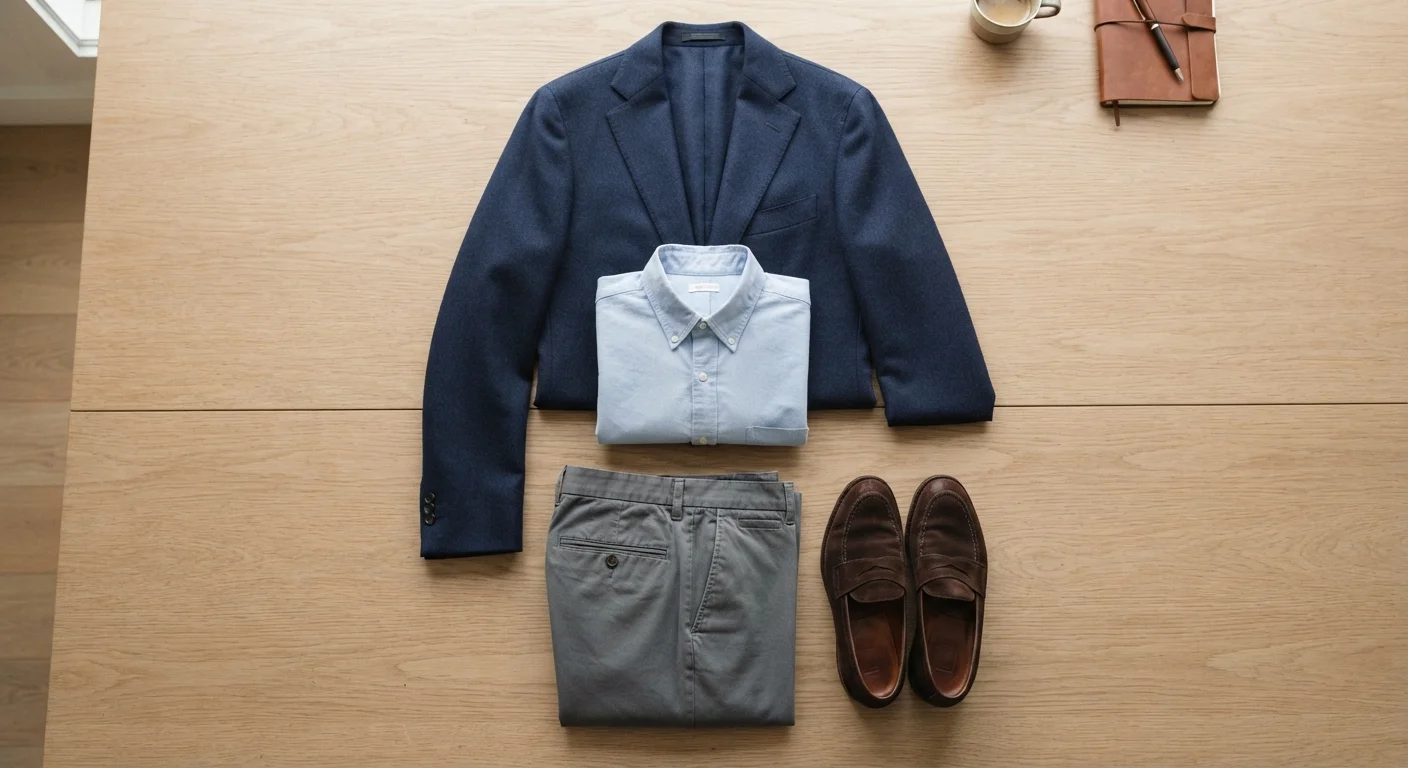
The standard for many modern American workplaces, business casual means professional-looking clothing without requiring a full suit. Chinos or tailored trousers, blouses, blazers, and loafers or flats are common examples. Avoid athletic wear, graphic tees, and overly casual footwear.
Business Formal
Suits, ties, and tailored dresses or pantsuits. This level is expected in traditional corporate environments, courtrooms, and formal business meetings. Colors are typically neutral and conservative.
Cocktail Attire
Dressy but not black-tie. Knee-length or midi dresses, tailored separates, or a suit with a dress shirt (tie optional) all work. This is the go-to for evening events, galas, and formal celebrations.
Black Tie
The most formal standard for social events. Floor-length formal gowns or floor-length skirts paired with dressy tops, and tuxedos or formal dark suits are expected. Black tie optional allows slightly more flexibility but still skews very formal.
Resort Casual / Festive Attire
These looser labels typically mean something elevated and celebratory — sundresses, linen suits, or colorful separates. They're common at destination weddings, holiday parties, and warm-weather events where strict formality would feel out of place.
A few notes worth keeping in mind: these categories blur at the edges, and what counts as "business casual" at a law firm may look different at a creative agency. When in doubt, err slightly more formal — it's easier to dress down than up once you've arrived. Also consider that building a wardrobe that can flex across multiple tiers is genuinely achievable. A well-fitted blazer, neutral trousers, and quality footwear can be remixed across business casual, smart casual, and even some cocktail settings. Versatile pieces that work across seasons are the foundation of that kind of wardrobe.
Reading the Room: Context Clues That Help
No dress code definition exists in a vacuum. A few practical signals can help you calibrate:
- The venue: A rooftop bar signals something different than a hotel ballroom, even if both invitations say "cocktail attire."
- The industry: Tech and creative fields skew casual across the board; finance, law, and healthcare tend to read more conservatively.
- Who's hosting: A startup founder's wedding and a senior partner's retirement dinner both say "festive attire" — but the expectations differ.
- Time of day: Morning and daytime events almost always read more relaxed than evening ones.
If you're genuinely unsure, it's perfectly reasonable to ask the host or check with someone else attending. That's not a social faux pas — it's being considerate.
When the Dress Code Is Genuinely Unclear
Some invitations use creative or non-standard language — 'garden party chic,' 'elevated casual,' or 'festive' — that doesn't map neatly to a defined tier. In these cases, look at the venue and event type first, then aim for something polished and seasonally appropriate. A safe general rule: choose something you'd feel comfortable being photographed in, without being the most or least dressed person in the room.
Dress codes are also just one input into how you dress. Your personal style, comfort, and identity matter too. Understanding your own style archetype can make it easier to interpret dress codes through your own lens rather than defaulting to a generic template. And if you want guidance on fit and silhouette as you build out those key pieces, separating useful body-shape advice from outdated rules is a solid next step.