

| Number of recognized archetypes | No fixed count — commonly cited ranges vary from 7 to over 20 (Fashion and image-consulting literature, various sources) |
| Origin of the concept | Adapted from Jungian psychological archetypes into style and image consulting (Academic fashion studies) |
| Most common archetype blend | Most individuals identify with 2–3 archetypes simultaneously (Image consulting practitioners, general consensus) |
| Practical use | Helps streamline shopping, wardrobe building, and self-expression |
What Is a Style Archetype?
A style archetype is a recognizable pattern of aesthetic choices — silhouettes, colors, textures, and overall mood — that tends to cluster together in a coherent fashion identity. Think of archetypes as a shared vocabulary: knowing the names helps you search, communicate, and experiment with intention.
Archetypes are descriptive, not prescriptive. Most people don't live inside a single one — they blend two or three, shift between them across contexts, or evolve over time. If you're not sure where you land yet, the guide to finding your aesthetic is a useful starting point before diving into these definitions.
| Number of recognized archetypes | No fixed count — commonly cited ranges vary from 7 to over 20 (Fashion and image-consulting literature, various sources) |
| Origin of the concept | Adapted from Jungian psychological archetypes into style and image consulting (Academic fashion studies) |
| Most common archetype blend | Most individuals identify with 2–3 archetypes simultaneously (Image consulting practitioners, general consensus) |
| Practical use | Helps streamline shopping, wardrobe building, and self-expression |
The Core Style Archetypes
The following are among the most widely recognized fashion identities. Each entry captures the defining sensibility — not a rigid uniform.
Minimalist
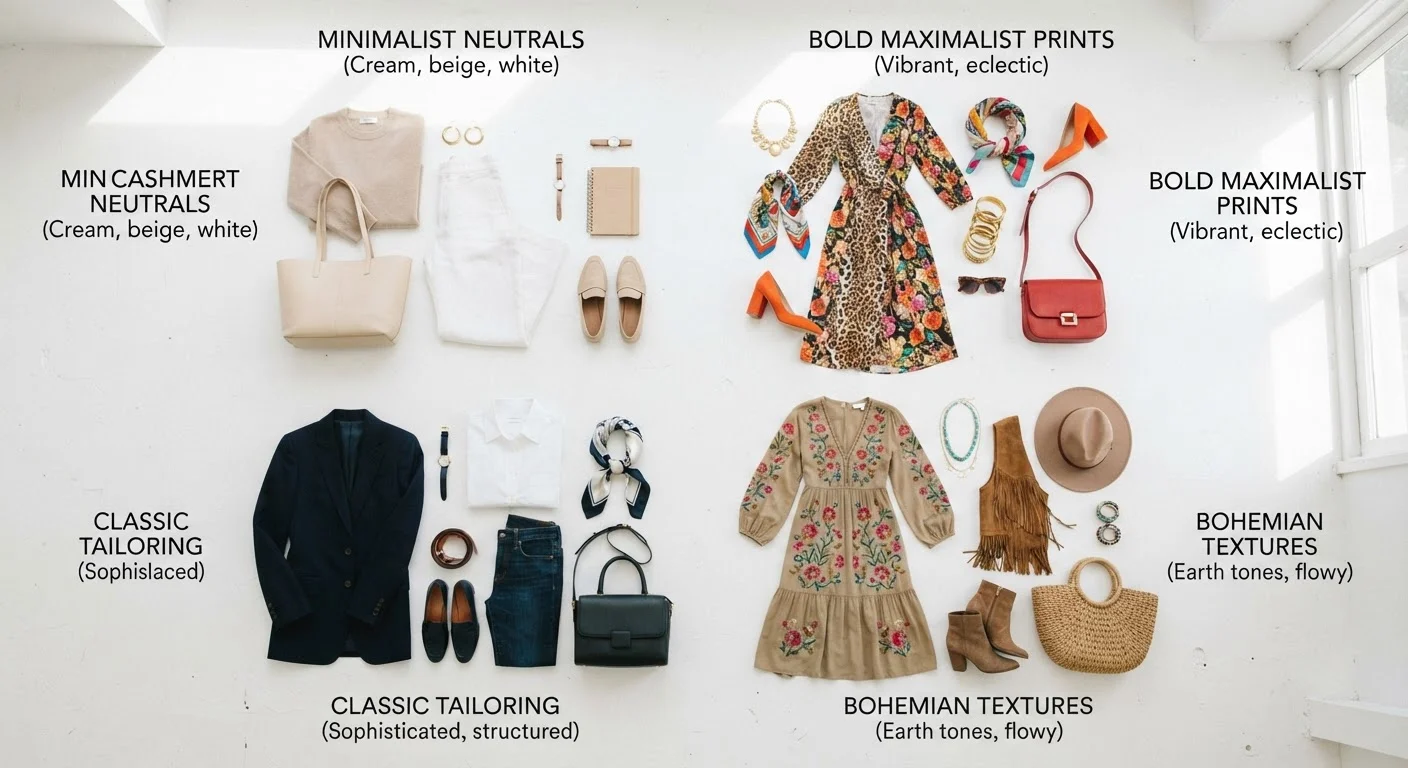
Defined by restraint: clean lines, a neutral or tightly edited color palette, and a preference for quality over quantity. The minimalist aesthetic strips away ornamentation and favors silhouette and fabric over embellishment.
Maximalist
The opposite of minimalism — layering prints, colors, textures, and accessories in ways that celebrate abundance and visual richness. Maximalism is intentional exuberance, not simply wearing more.
Classic
Anchored in timeless, well-tailored pieces that resist trend cycles: structured blazers, trench coats, Oxford shirts, and enduring cuts. The classic archetype prioritizes longevity and polish.
Romantic
Soft, feminine-leaning aesthetics characterized by flowing fabrics, floral motifs, lace, and delicate details. Romantic dressing evokes warmth and sensibility rather than power or edge.
Edgy / Avant-Garde
Pushes conventional boundaries through unconventional silhouettes, unexpected materials, asymmetry, and conceptual construction. Avant-garde dressing treats clothing as a form of artistic expression.
Bohemian
Inspired by free-spirited, globally influenced aesthetics: earthy tones, natural fabrics, layered jewelry, embroidery, and relaxed silhouettes. Bohemian style often reflects a connection to craft and travel.
Athleisure
Performance and sportswear elements adapted for everyday wear — think joggers, technical fabrics, and sneakers styled beyond the gym. Athleisure prioritizes ease and comfort without abandoning aesthetic intention.
Preppy
Rooted in Ivy League and East Coast American collegiate dress: polo shirts, chinos, loafers, cable knits, and a palette of navy, white, and red. Preppy style signals tradition, neatness, and a certain institutional sensibility.
These archetypes aren't exhaustive. Subculture-rooted aesthetics (punk, goth, streetwear, cottagecore, Y2K revival) each carry their own distinct visual logic and community history. For a deeper look at how personal style and trend cycles interact, see navigating personal style vs. trends.
Blending Archetypes and Dressing Intentionally
Identifying your archetype mix is a practical tool, not a label to live by forever. Knowing you lean classic with romantic accents can sharpen how you shop, curate, and style — reducing decision fatigue and impulse purchases that don't serve your wardrobe long-term.
2–3
Archetypes most people identify with at once
Image consultants and style researchers generally note that few people fit cleanly into a single archetype — hybrid identities are the norm.
~30%
Of wardrobes actually worn regularly
Research cited by wardrobe consultants suggests a significant portion of most people's clothing goes unworn; archetype clarity is one tool to reduce this gap.
Two popular frameworks for putting archetype awareness into practice are the signature style approach and the capsule wardrobe model. They solve the same problem from different angles — the signature style vs. capsule wardrobe comparison breaks down how each works.
One common obstacle is the belief that archetypes come with rules you must follow — that minimalism means only beige, or that avant-garde requires unaffordable runway pieces. These myths hold a lot of people back and are worth examining. For practical, everyday application of any archetype, the Everyday Fashion hub covers dressing confidently across real-life contexts.
This article is for informational and educational purposes only. Style archetypes are cultural and creative frameworks, not clinical or psychological classifications.