

Key Takeaways
Why These Myths Persist — and Why They Matter
Fashion mythology is stubborn. Ideas like "dress for your body type" or "spend money to look put-together" have been repeated so often they feel like facts. But many of the beliefs that hold people back from expressing themselves through clothing have little grounding in reality — and considerable grounding in marketing, gatekeeping, and outdated social norms.
Research in environmental psychology and social identity theory has long explored how clothing shapes — and reflects — our sense of self. When people feel blocked from authentic dressing, the loss isn't just aesthetic. Studies have suggested that congruence between how we present ourselves and how we feel internally is linked to broader psychological comfort. In other words, what you wear can matter more than you'd think — which is exactly why the myths blocking authentic expression deserve a direct, honest look.
If you're still searching for where to start, finding your aesthetic is a useful first step before working through the misconceptions below.
Myth
You need a large budget to develop a real personal style.
Fact
Style is primarily about intention, curation, and self-knowledge — none of which require significant spending.
The idea that style costs money is one of fashion's most persistent gatekeeping tools. In practice, wardrobe researchers and stylists consistently observe that a smaller, thoughtfully chosen set of pieces worn with confidence outperforms a large, unfocused wardrobe at any price point. Thrift stores, clothing swaps, and careful stewardship of what you already own are legitimate and widely used approaches. Aligning your wardrobe with your values — including budget constraints — is itself a form of intentional style.
Myth
There are style rules you must follow or you'll look wrong.
Fact
Most 'rules' in fashion are conventions that shift over time — not universal standards with objective authority.
"No white after Labor Day," "match your metals," "dress for your body type" — these phrases have the cadence of laws but the lifespan of trends. Many originated in specific cultural or marketing contexts and have no universal design logic behind them. Knowing a convention exists is genuinely useful; feeling obligated to follow it without question is not. Personal style goes far deeper than rules, and the most distinctive dressers throughout history have typically been those who understood conventions well enough to decide when to set them aside.
Myth
Your body type determines what you can and can't wear.
Fact
Clothing fits differently across bodies, but fit and alteration — not avoidance — are the practical tools that matter.
"Dress for your body type" advice usually amounts to a list of things certain body shapes should hide or minimize — which frames natural variation as a problem requiring a solution. This framing is both limiting and unsupported by any objective standard of dressing. Fit does matter: a garment altered to fit a specific body well will almost always look more polished than the same garment worn off-the-rack. But the solution to fit challenges is tailoring and adjustment, not avoiding entire silhouettes or styles that genuinely appeal to you.
Myth
Age sets a ceiling on what's appropriate to wear.
Fact
Appropriateness in dressing is contextual — related to setting and occasion, not to a person's age.
The notion that people should "dress their age" implies a ladder of increasing restriction that has no agreed-upon definition or endpoint. Context genuinely matters in dress — a beach coverup and a boardroom suit serve different functions — but age as an independent variable determining what colors, silhouettes, or styles someone can explore has no logical foundation. Many fashion researchers and commentators have noted that age-based style rules tend to reinforce ageism rather than reflect any aesthetic or social reality. Style, like identity, can and does evolve at every stage of life.
Myth
If you don't have a consistent, recognizable 'look,' you don't really have a style.
Fact
Personal style can be fluid, varied, and still wholly authentic — consistency is not a requirement for meaning.
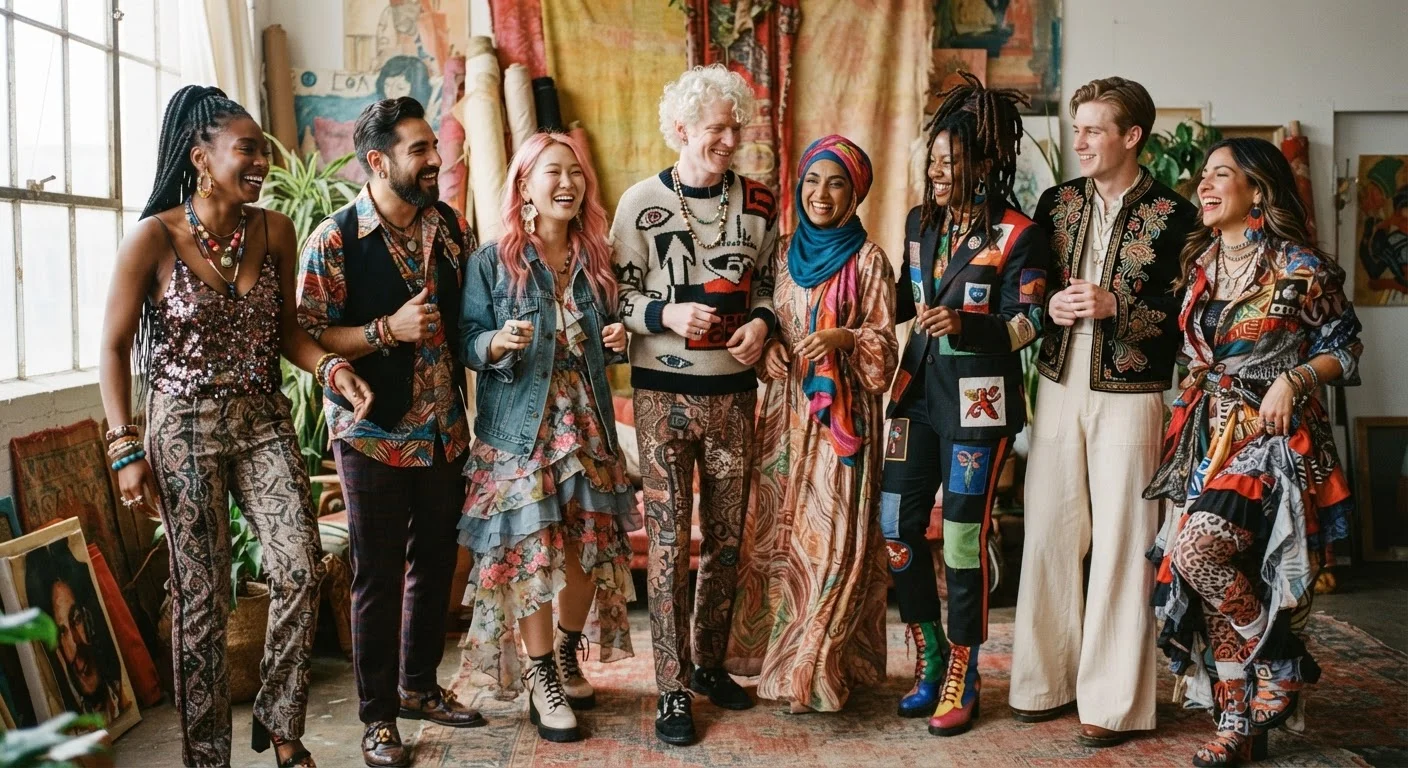
The pressure to maintain a single, coherent aesthetic across every context — work, weekends, occasions — doesn't reflect how most people actually live or how identity works. Style archetypes are useful reference points, not boxes to lock yourself into. Many people dress differently depending on mood, season, or circumstance and find that variety itself is part of their expression. Authenticity doesn't require uniformity — it requires that your choices feel genuinely yours, whatever form that takes.
What the Evidence Actually Suggests
Dismantling these myths isn't about telling you that anything goes at all times — context matters, and balancing personal style with practical realities is a real skill worth developing. But there's a meaningful difference between thoughtful adaptation and self-erasure driven by fear of getting it "wrong."
96%
of people dress differently based on mood
A survey conducted by researchers at the University of Hertfordshire found that the vast majority of respondents reported that their clothing choices were influenced by their emotional state — supporting the idea that style is dynamic, not fixed.
~$0
minimum cost to start refining personal style
Style educators and wardrobe consultants broadly agree that working with existing pieces through different combinations, proportions, and layering is the most effective starting point — requiring no new purchases.
It's also worth noting that the style conversation itself is shifting. Fashion's relationship to gender expression has evolved significantly, and what once felt like a firm rule — about who can wear what — is now understood more as a cultural moment than a universal truth. If your personal style feels stuck rather than evolving, that's common too; understanding why style stalls can help you move forward without pressure.
Avoid Letting 'Research' Replace Instinct Entirely
Style guides, archetype quizzes, and rule-based frameworks can be useful starting points, but over-relying on external systems to determine what you should wear can become its own form of creative limitation. These tools are meant to inform your choices, not replace your own sense of what feels right. Use them as prompts, not prescriptions.
Ultimately, the goal isn't a perfectly curated wardrobe — it's a relationship with clothing that feels honest. The complete picture of self-expression through style goes deeper than any single outfit, and accessories alone can communicate more about identity than a full look sometimes does. Start where you are, work with what you have, and give yourself permission to keep changing your mind.